
CPR, or cardiopulmonary resuscitation, is a vital emergency procedure. It can save lives during a cardiac arrest. CPR keeps blood and oxygen flowing. This helps vital organs function until medical help arrives. Knowing the right technique is key. Swift and efficient action can significantly enhance survival chances. This guide covers important parts of adult CPR. It helps you gain the knowledge necessary for confident action in emergencies.
This updated version boosts uniqueness, sharpens clarity, and makes it easier to read. It keeps all the key information. It shares the content in a way that captures the audience’s interest. This helps readers absorb key details with greater ease.
What is adult CPR?
Adult CPR saves lives during cardiac arrest, which usually happens after puberty. This condition disrupts the heart’s rhythm. It stops blood flow and poses a serious threat to survival. Without quick intervention, brain damage or death can occur within minutes. Doing CPR quickly can help blood flow and improve survival chances in an emergency.
Adult resuscitation is crucial. It helps keep blood flowing and supplies oxygen to the brain and important organs. This action prevents lasting damage. Bystanders who perform CPR immediately significantly increase survival chances during cardiac arrest. It helps keep the person stable until professional medical care arrives.
Get certified in CPR
CPR & AED Training
3-hour in-person training with a 2-year nationally recognized certification.
CPR, AED & First Aid Certification
Instructor-led on-site. Practice on real manikins and AED trainers.
What are the differences between adult CPR and pediatric CPR?
The key distinction between adult and pediatric CPR lies in chest size and structure. Adults have larger, deeper chests. So, the compression technique is different from the one used on children. Pediatric CPR calls for gentler, more accurate compressions. This approach fits smaller, fragile chests and still allows for effective resuscitation.
Adults have larger, more developed chests, while children have smaller, less muscular frames. These differences mean we need to change how we do CPR. For children, chest compressions should be gentler and more precise to work well.
How do these differences affect chest compression techniques?
The main difference between adult and pediatric CPR is in chest compressions. Children need gentler and more controlled compressions. This helps avoid injury while still being effective.
- For adult CPR, position both hands at the center of the chest and press down about 2 to 2.4 inches. Do 30 compressions at a steady pace of 100 to 120 per minute. Then, give two rescue breaths. This helps restore circulation and breathing.
- For child CPR, use one or both hands on the lower sternum. Push down about 2 inches deep. Do this at a rate of 100 to 120 compressions per minute. This helps keep blood flowing.
- For infant CPR, use two fingers for chest compressions. Do this at a rate of 120 compressions per minute. This keeps circulation steady.
Here is a brief overview of how CPR techniques vary for adults, children, and infants:
Key Difference between Adult, Child and Infant CPR
| Aspect | Adult CPR | Child CPR | Infant CPR |
|---|---|---|---|
| Age Range | Puberty and older | 1 year to puberty | 0 to 1 year |
| Compression Technique | Two hands on the lower half of the sternum | One or two hands on the lower half of the sternum | Two fingers or two thumbs on the sternum |
| Compression Depth | At least 2-2.4 inches (5 cm) | About 2 inches (5 cm) | About 1.5 inches (4 cm) |
| Compression Rate | 100-120 compressions per minute | 100-120 compressions per minute | 120 compressions per minute |
| AED Use | Same as adult CPR | Child-specific pads or pediatric settings | Child-specific pads or pediatric settings |
| Hands Placement | Lower half of the sternum between the nipples | Two fingers or two thumbs on the sternum | Two fingers or two thumbs on the sternum |
How to Perform Adult CPR?
Fast and accurate CPR is vital during cardiac arrest. It provides important help to boost an adult’s chances of survival.
The first step is to check the situation.
- Check your surroundings first. Make sure they are safe for you and others before helping.
- Hold the person’s shoulders gently. Apply steady pressure and ask, “Are you okay?” If there is no response, proceed immediately.
How soon should adult CPR begin after a person loses consciousness?
Start CPR right away if an adult is unresponsive. Every second counts in cardiac arrest. Prompt action greatly enhances survival chances, while delays diminish them. Continue CPR until medical help arrives.
The next step is to check for breathing and a pulse.
- Check if the person is breathing. Observe, listen, and feel for breath.
- Feel for a pulse by finding the carotid artery on the neck and checking for no more than 10 seconds. If you do not detect either breathing or a pulse, administer CPR immediately.
Which adult victim needs high-quality CPR?
If an unresponsive adult is not breathing, immediate resuscitation is crucial. This involves doing chest compressions and giving rescue breaths. Follow the guidelines to boost survival chances.
The next step is to call for help.
Dial 911 right away to get medical help. If others are around, have someone make the call while you begin CPR to ensure help arrives without delay.
Next, start chest compressions.
- Ensure the adult victim is lying on his or her back on a firm surface.
- Kneel next to the victim’s chest.
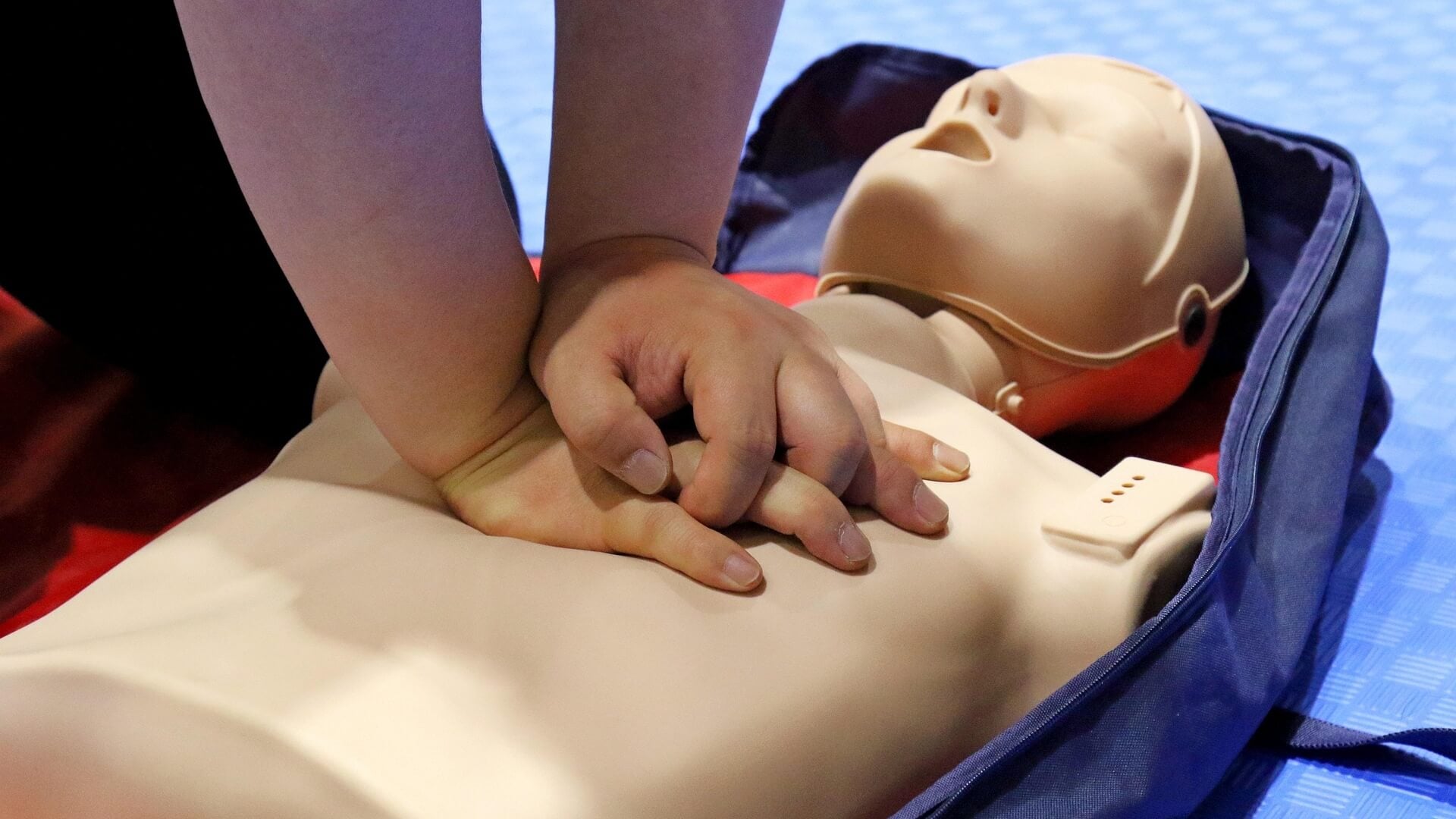
- Place one hand’s heel on the center of the victim’s chest. Then, place your other hand on top, interlocking your fingers.
- Keep your arms straight. Position your shoulders over your hands. Lock your elbows.
- Start chest compressions by pushing hard and fast, aiming for a depth of 2 to 2.4 inches (5 centimeters).
- Allow the chest to return to its original position between compressions. Maintain hand placement.
What is the correct rate for chest compressions in adult CPR?
Adult CPR needs chest compressions at a rate of 100 to 120 per minute. This helps keep blood flowing and supplies oxygen to vital organs, such as the brain and heart.
Matching chest compressions to a familiar song can help with CPR. For example, “Stayin’ Alive” by the Bee Gees is a good choice. It keeps the rhythm at 100 to 120 beats per minute. This helps maintain a steady and effective pace.
How is the force of chest compressions distributed across the chest during adult CPR?
In adult CPR, you push down on the chest. This presses the heart between the sternum and spine. It mimics the heart’s natural pumping. This helps keep blood flowing. Use firm, deep compressions with balanced hand placement. This ensures effectiveness and reduces injury risk.
Next, give rescue breaths.
After chest compressions in adult CPR, give rescue breaths. This helps deliver oxygen to the lungs and supports vital functions.
- Make sure the adult victim remains on his or her back on a firm surface.
- Tilt the head back to expose the airway; then lift the chin.
- Pinch the nose shut with your thumb and forefinger. This seals the mouth and prevents air from escaping through the nostrils.
- Take a normal breath and cover the person’s mouth with yours, ensuring a tight seal.
- Give a one-second breath, watching for the person’s chest to rise.
- Let go of your mouth and watch your chest drop.
What is the chest compression-to-breath ratio in adult CPR?
Adult CPR follows a cycle of 30 chest compressions followed by 2 rescue breaths. This process keeps blood flowing and helps oxygen get to important organs. This boosts survival chances during a cardiac emergency.
Next, continue the cycle.
Resume chest compressions in the center of the chest after giving rescue breaths. Keep a 30:2 ratio. Continue this cycle until medical help arrives or the person begins to show signs of life.
Give rescue breaths quickly and with few pauses in chest compressions.
How many CPR cycles should you perform on an adult in two minutes?
Do five CPR cycles in two minutes. Keep a steady rhythm. Give 30 chest compressions and then 2 rescue breaths for each cycle.
In two-rescuer CPR for an adult, how often should the rescuers switch roles?
In two-rescuer adult CPR, switch roles every two minutes or after five cycles. This helps prevent fatigue and keeps compressions effective. One rescuer does chest compressions. The other gives rescue breaths. They switch roles without delays, transitioning seamlessly.
Is adult CPR effective without rescue breaths?
CPR can work well without rescue breaths. The American Heart Association tells untrained responders to focus on chest compressions.
Hands-only CPR relies on chest compressions to keep blood flowing. This helps ensure that oxygen reaches important organs, such as the brain and heart. This helps sustain the person until medical help arrives.
Next, use an AED.
An Automated External Defibrillator (AED) is a portable device. It gives an electric shock to help restore heart rhythm in cardiac arrest. Use it immediately if it is available.
- Turn on the AED and follow the provided audio or visual instructions for proper use.
- Remove any clothing and ensure the chest is dry before attaching the AED pads. Place one on the upper right chest and the other on the lower left, following the pad instructions.
- After placing the pads, let the AED check the heart rhythm. Make sure no one touches the person during this time.
- Follow the AED’s instructions with precision. If someone requires a shock, ensure that everyone stands clear. If not, the device will guide you to continue CPR.
- If the AED recommends a shock, press the button while ensuring no one is touching the person. Follow the device’s instructions with attention to detail.
- Start chest compressions immediately after the shock. Follow the AED’s prompts for timing.
Next, check the victim’s condition.
Check the person’s vital signs during CPR. Also, look for responsiveness to make sure it’s working.
- Watch and listen for breathing. Feel for breath, and check the carotid artery for a pulse.
- If breathing stabilizes and a pulse returns, CPR is no longer needed. Continue to track the situation and prepare to resume if the condition declines.
- When help arrives, tell them about the person’s condition. Share what you have done so far.
When should you seek medical attention after performing adult CPR?
Even if a person recovers after CPR, they still need a medical check-up. This helps find out what caused the cardiac arrest and ensures they get the right treatment.
Call for immediate medical help if the person:
- does not regain consciousness.
- has an uncertain condition.
- suffers a cardiac arrest again.
- develop complications during or after CPR.
What should the rescuer focus on most during adult CPR?
In adult CPR, the main goal is to give strong chest compressions. This keeps blood flowing and supplies oxygen to the brain and heart.
Effective chest compressions need proper technique to ensure high-quality CPR.
- Chest compressions should be 2 to 2.4 inches deep to maintain blood circulation to the heart and brain.
- In adult CPR, perform compressions at a rate of 100 to 120 per minute to maintain blood circulation.
- Let the chest rise fully between compressions. This helps the heart refill with blood and makes CPR more effective.
- Cut interruptions in chest compressions to maintain CPR effectiveness. Only pause briefly for rescue breaths or AED use to avoid reducing their impact.
High-quality chest compressions are the main focus in CPR. Rescue breaths and AED use are also important, but they come after. Keeping the right depth and rate with few interruptions helps blood flow. This can boost survival chances.
What signs can you tell if adult CPR is effective?
Signs That CPR Is Working:
Chest Rise: Watch the chest rise with each rescue breath. This shows good airflow and effective ventilation.
Color Improvement: A good sign during CPR is when the skin, especially around the lips and face, regains color. A shift from pale or blue to pink indicates better oxygen flow.
Return of Normal Breathing: When a person starts breathing normally and stops gasping during CPR, it means the CPR is working.
Signs of Consciousness: Signs of recovery may include regained consciousness, movement, or responsiveness to verbal commands, indicating improvement.
Checking the carotid pulse shows that blood circulation has returned. This means resuscitation was successful.
These signs may not always appear, but their absence does not mean failure. Continue CPR until medical help arrives or the person shows signs of recovery.
RECOMMENDED
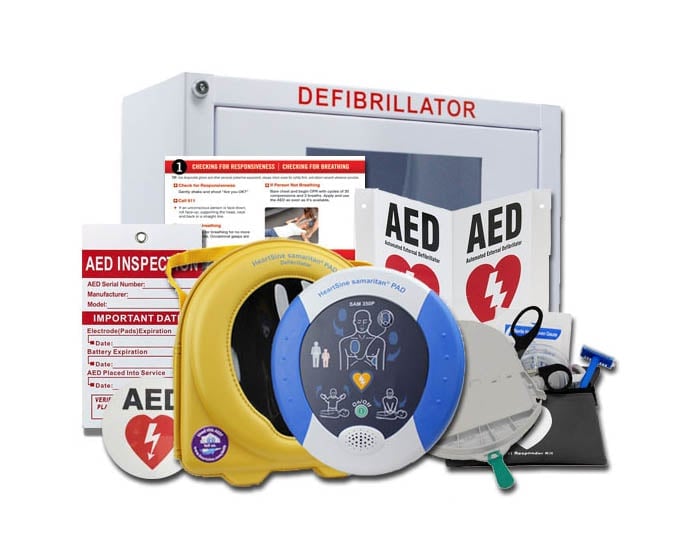
HeartSine Samaritan 350P AED Package
Compact, fully-automatic AED designed for first-time responders. Pads, battery, carry case and wall sign included.
When might the standard adult CPR technique need modification?
Adult CPR might need changes in certain situations for the best care.
After a drowning, clear the airway of water before beginning CPR. Tilt the head back, lift the chin, and start rescue breaths.
For CPR on a pregnant person, place your hands at the center of the chest, between the nipples. This helps avoid pressure on the uterus and allows for effective compressions.
For suspected chest trauma from an accident or fall, do compressions gently. This helps prevent further injury. If possible, seek medical guidance for proper resuscitation.
For elderly or frail people, use less force when doing chest compressions. This helps prevent injuries but still ensures effective CPR. Consider their physical condition to maintain a safe balance.
Healthcare providers can use advanced methods like airway management, medication, and cardiac monitoring. These techniques help make CPR more effective.
How is CPR different for an unresponsive adult choking victim?
CPR for an unresponsive adult who is choking aims to clear the airway. This needs a different method:
Assessment: Check if the person responds. If a person isn’t responding and struggles to breathe or gasps, they likely have a blocked airway.
Call for Help: Call emergency services now or ask someone nearby to do it while you provide aid.
Chest Compressions: Lay the person on their back on a hard surface. Start CPR with chest compressions. Skip the rescue breaths. Place your hands in the middle of the chest. Push down hard at a speed of 100 to 120 compressions each minute. This helps clear the airway.
Check for Obstruction: After 30 compressions, check the mouth for visible obstructions. If present, grasp the object with caution and remove it.
Ventilation: If chest compressions don’t clear the airway, give two rescue breaths. Tilt the head backward, raising the chin to open the air passage. Pinch the nose closed, then form a tight seal over the mouth.
Deliver two slow breaths, each lasting about one second, and watch for the chest to rise.
Continue cycles: Repeat 30 chest compressions, check for the obstruction, and give two rescue breaths. Do this until the airway is clear, help arrives, or the victim breathes on his or her own.
Check the victim’s condition and adjust your technique in response. If the victim becomes responsive, breathing, or coughing, stop CPR. Then, track their condition. If they become unresponsive again, resume CPR immediately. The primary goal is to clear the airway and ensure the victim receives oxygen.
How is CPR different for a patient who was choking before cardiac arrest?
When performing CPR on a choking victim, clearing the airway is crucial. This may involve the Heimlich maneuver or chest thrusts to remove the blockage. After clearing the airway, start CPR. Do chest compressions and give rescue breaths. This helps restore circulation and oxygen flow.
What equipment and supplies must adult CPR include?
To perform adult CPR, you need some important tools. These include AEDs, barrier devices, and gloves. Gloves help keep you safe from germs. Keep up with regular maintenance to stay prepared. Choose dependable tools that match your needs and budget.
The Importance of Learning Adult CPR
Learning adult CPR is a vital skill that can save lives in emergencies. It lets people help right away until professionals arrive. This builds confidence and boosts community readiness.
FAQs
What is adult CPR?
Adult CPR saves lives during heart emergencies. It helps restore blood flow and oxygen. It includes chest compressions and rescue breaths. This keeps the heart and brain working until help arrives. Using proper technique is key for adult resuscitation. Aim for a compression depth of 2 to 2.4 inches. Also, keep a rate of 100 to 120 compressions per minute for the best results.
What are the differences between adult CPR and pediatric CPR?
The main difference between adult and pediatric CPR is the force and technique used. Adults need deeper, stronger chest compressions because of their larger bodies. In contrast, children and infants need gentler compressions to prevent injury. Pediatric CPR has different hand placements. For children, use one or two hands. For infants, use just two fingers.
What is the key difference between adult, child, and infant CPR?
CPR varies for adults, children, and infants. The main differences are in compression depth, force, and hand placement. Adult CPR requires compressions of 2 to 2.4 inches using both hands. Child CPR usually requires compressions of about 2 inches deep. You can use one or two hands. Infant CPR requires lighter compressions of about 1.5 inches, using two fingers. Rescue breaths are crucial in pediatric CPR. Kids have smaller lungs, so they need them more.
Why is learning adult CPR important?
Learning adult CPR gives people the skills to handle cardiac emergencies. This can save lives while waiting for medical help. Immediate CPR can double or triple the chances of survival.
Maintaining blood flow to vital organs improves survival chances. It builds confidence and helps the community prepare. This way, more people can act in emergencies.
When should you use adult CPR instead of pediatric CPR?
Adult CPR is for anyone who has reached puberty or has a fully developed body. This usually happens during adolescence. Pediatric CPR is for kids and babies. It uses a different compression depth and force. If you’re not sure, use adult CPR guidelines. Deeper compressions usually work better in emergencies.

Not sure which AED or training fits your needs?
An MDSI medical-oversight expert walks you through it — no obligation.
Conclusion
It’s important to know how Adult CPR, Child CPR, and Infant CPR differ. Understanding these differences can help you give effective life-saving aid in emergencies. Adult CPR needs strong, deep compressions. Pediatric CPR uses gentler techniques to avoid injury. Understanding these differences helps responders act with confidence. They can respond based on the victim’s age and size with precision. When people learn CPR techniques, they can help create a safer community. This boosts survival rates and saves lives when every second matters.