
Many say their heart skips a beat in fear or flutters when in love. But these feelings might mean more than just poetic words. They can signal cardiac arrhythmias. These are irregular heart rhythms that shouldn’t be ignored.
What is an arrhythmia?
A cardiac arrhythmia happens when the heart’s rhythm is off. This can make it beat too fast, too slow, or unevenly. Disruptions occur when the electrical signals controlling the heartbeat stop working properly.
Arrhythmias sometimes appear in healthy hearts and often resolve quickly without harm. If these issues keep happening and disrupt heart function, they can be life-threatening. Severe arrhythmias can cause sudden cardiac arrest in minutes. This stops blood flow and oxygen to the brain. It can lead to fainting and, if not treated, death.
Get certified in CPR
CPR & AED Training
3-hour in-person training with a 2-year nationally recognized certification.
CPR, AED & First Aid Certification
Instructor-led on-site. Practice on real manikins and AED trainers.
Arrhythmia Mechanism: Heart Function 101
To grasp why arrhythmias develop, it helps to first look at the heart’s structure and the way it functions.
The heart has four chambers. The right and left atria sit on top, while the right and left ventricles are below. These chambers work together to keep blood flowing. Blood from the body flows into the right atrium and is sent to the lungs by the right ventricle for oxygenation. After getting oxygen, it goes back to the left atrium. Then, it is pumped out to the body through the left ventricle. In this process, the atria act as receiving chambers. The ventricles provide the pumping force that drives circulation.
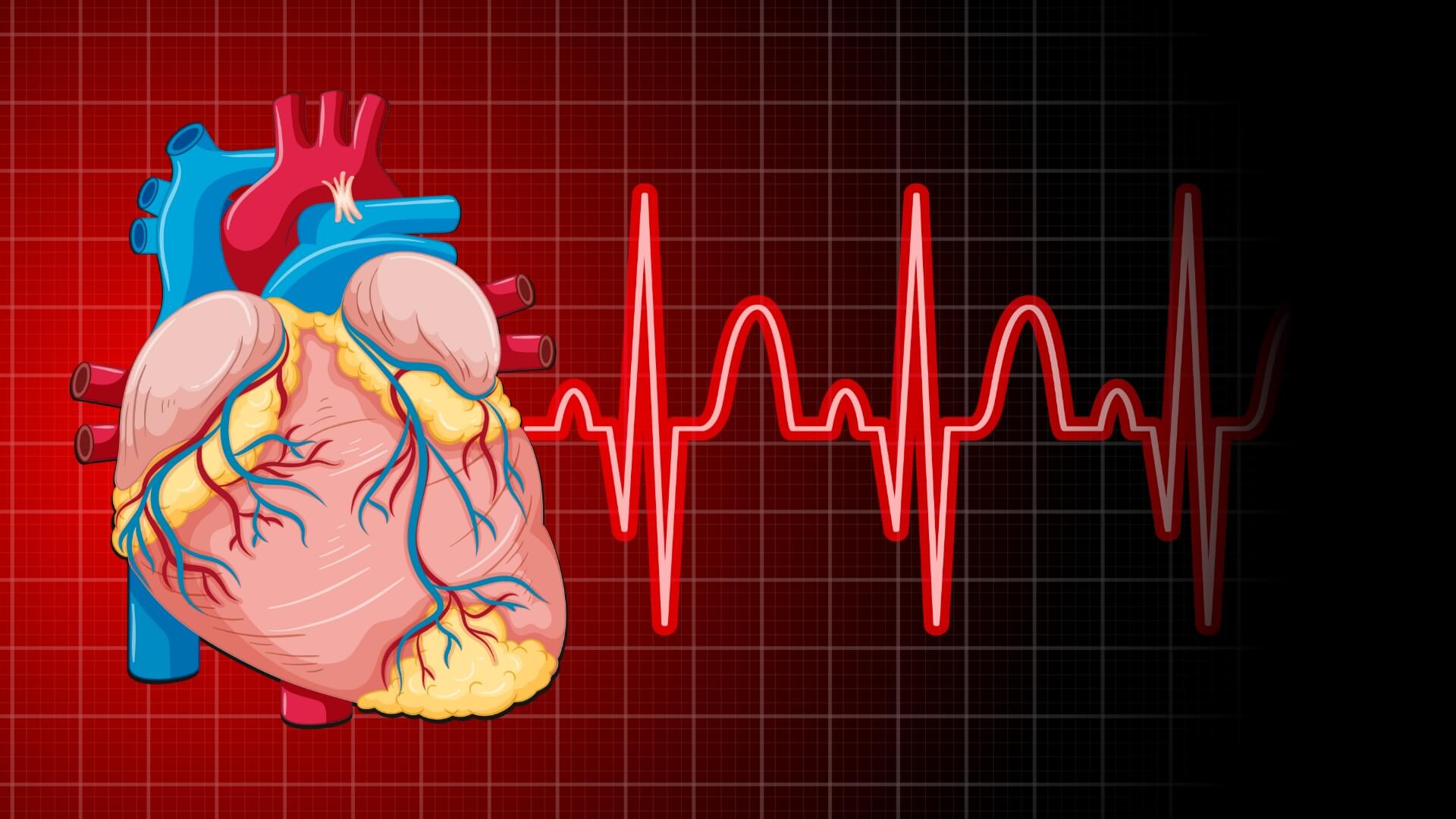
The heart’s rhythm is driven by electrical impulses that coordinate each beat. The sinoatrial (SA) node is at the heart of this process. It acts as the natural pacemaker, sending 60 to 100 signals each minute. These signals trigger heart contractions. These impulses travel through the atria and reach the atrioventricular (AV) node. The AV node briefly delays the signal, letting the atria empty. The impulse then passes to the ventricles, prompting them to contract. On an ECG, wave patterns show how electrical activity flows through the heart.
The heart works through a precise cycle of squeezing and relaxing. This cycle helps pump blood to the lungs and the rest of the body. When this rhythm is disrupted, the heart’s efficiency declines. Disturbances in the pacemaker or electrical pathways cause arrhythmias.
Classification of Arrhythmias
Arrhythmias are defined by how they affect heart rate and where they start in the heart. A normal heart changes its pace to meet the body’s oxygen needs. A healthy resting rate usually ranges from 60 to 100 beats per minute.
- Tachycardia: A heart rate that exceeds 100 bpm
- Bradycardia: A heart rate below 60 bpm
- Supraventricular arrhythmia: If the atria, the heart’s upper chambers, don’t function properly, they can lead to supraventricular arrhythmias. These are typically classified into atrial flutter, atrial fibrillation, and paroxysmal supraventricular tachycardia.
- Ventricular arrhythmia: Ventricular arrhythmias are irregular heartbeats. They start in the ventricles, which are the heart’s lower chambers. A mild form called premature ventricular contractions includes extra beats. These can feel like a skipped heartbeat and are quite common. Ventricular fibrillation and ventricular tachycardia are more serious. They can result in sudden cardiac arrest in just minutes.
What arrhythmias can cause sudden cardiac arrest?
Sudden Cardiac Arrest occurs when an arrhythmia suddenly stops the heart from pumping blood. If oxygen doesn’t reach the brain and body, a person will become unresponsive. They may also stop breathing normally.
During sudden cardiac arrest, the heart usually experiences pulseless ventricular tachycardia or ventricular fibrillation. These dangerous arrhythmias can be fatal in minutes without urgent treatment. Unlike less harmful ones, they need immediate action.
- Pulseless ventricular tachycardia is a serious heart rhythm. It starts in the ventricles. The heart beats too fast to pump blood effectively.
- Ventricular fibrillation is a serious arrhythmia. In this condition, fast and chaotic electrical signals cause the ventricles to quiver. As a result, they cannot pump blood to the body.
Both dangerous arrhythmias can be reversed. A defibrillation shock from an Automated External Defibrillator (AED) makes this possible.
Sudden Cardiac Arrest Risk Factors and Causes
Arrhythmias can come from various factors that affect the heart’s electrical activity. Dangerous rhythms can lead to sudden cardiac arrest. Several conditions may raise the risk of SCA.
RECOMMENDED
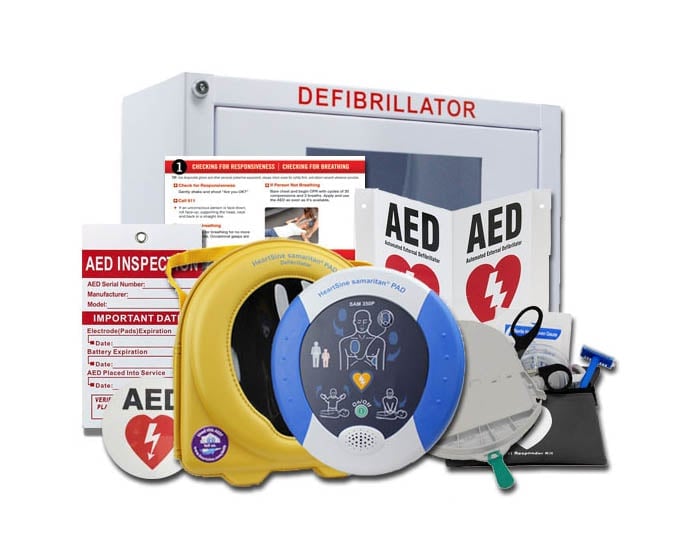
HeartSine Samaritan 350P AED Package
Compact, fully-automatic AED designed for first-time responders. Pads, battery, carry case and wall sign included.
Symptoms and Diagnosis of Arrhythmia
Arrhythmias can cause symptoms like chest pain, palpitations, dizziness, fatigue, and shortness of breath. They can show up unexpectedly. In serious cases, they might only be noticed after a sudden cardiac arrest.
Doctors diagnose arrhythmias using various tests that track the heart’s rhythm. Several methods are commonly used.
- Electrocardiogram: An electrocardiogram (ECG) tracks the heart’s electrical activity. It shows how signals move through the heart. This routine test uses electrodes placed on the chest. They send impulses to a track. The track shows these impulses as wave patterns for analysis.
- Holter/Event/Patch Monitor: Portable ECG devices—such as Holter, event, and patch monitors—track heart rhythms over several days. Holter monitors can record for up to two weeks. This continuous tracking helps find intermittent arrhythmias. Event monitors only record activity when symptoms occur. Patch monitors attach to the chest. They provide continuous data for similar time frames.
- Stress Test: The stress test usually takes place on a treadmill or bike. It checks how well your heart performs and can spot arrhythmias during exercise. In some cases, a nuclear stress test with a safe radioactive tracer is used to highlight blood flow. Some patients can’t exercise. Yet, certain medications can mimic the heart benefits of physical activity.
- Electrophysiologic Testing (EP Study): In an electrophysiology study, doctors use thin electrode catheters. They guide these catheters through veins or arteries to reach the heart. This procedure uses local anesthesia. They record electrical signals from the atria and ventricles. This creates a detailed map of the heart’s impulses with each beat.
- Tilt Table Test: A tilt table test checks if frequent dizziness or fainting is linked to an unusual heart rate or blood pressure. During the exam, the patient lies on a table that tilts them up. This helps to reproduce symptoms while monitoring is done.
Treatment of Arrhythmia
Treatment for arrhythmias depends on their type and severity. There are different ways to manage the condition effectively.
- Lifestyle changes: A healthy lifestyle helps lower heart disease risk and keeps arrhythmias from worsening. Doctors recommend balanced nutrition, quitting smoking, and managing stress to improve heart health.
- Medications: Medications help manage irregular heart rhythms. Yet, they need careful diagnosis and monitoring. The table below highlights some of the drugs commonly used in arrhythmia treatment.
- MedicationHow it Works: Beta blockers target adrenoreceptors. They slow the heart rate and reduce contraction force. Ion channel blockers help restore normal heart rhythm. They do this by adjusting levels of calcium, sodium, magnesium, or potassium in heart cells. Blood thinners prevent dangerous clots. They lower the risk of heart attacks and strokes.
- Surgery: If lifestyle changes and medications don’t work, doctors may recommend advanced procedures or surgical implants for arrhythmias.
- Cardioversion: Cardioversion uses controlled electrical shocks. It helps restore a normal rhythm for issues like atrial fibrillation or atrial flutter. Unlike defibrillation, it is performed on patients who still have a pulse.
- Implantable cardioverter defibrillator (ICD): An implantable cardioverter defibrillator (ICD) is put under the skin. It monitors the heart’s electrical signals. If it detects dangerous rhythms, it delivers corrective shocks. It is commonly used for patients at risk of sudden cardiac arrest.
- Pacemakers: A pacemaker is placed in the chest or abdomen. It connects to the heart. It helps control its rhythm using gentle electrical impulses. Unlike an ICD, it cannot deliver shocks during pulseless tachycardia or fibrillation.
- Catheter ablation: Catheter ablation addresses arrhythmias by creating tiny scar tissue spots. These spots block abnormal electrical signals. The procedure involves guiding a catheter through a vein or artery in the groin. Then, heat or cold is applied to create scars.
FAQs
What do all cardiac arrest rhythms have in common?
All cardiac arrest rhythms stop the heart from pumping blood well. This causes a loss of circulation and oxygen delivery. These lethal rhythms’ ECG patterns show severe irregularities that demand immediate intervention.
What are the main cardiac arrest rhythms?
The four primary cardiac arrest rhythms include ventricular fibrillation, pulseless ventricular tachycardia, PEA (pulseless electrical activity), and asystole. These are considered fatal heart arrhythmia types that need rapid treatment.
How can lethal rhythms be identified on an ECG?
Lethal rhythms ECG patterns appear as chaotic, absent, or extremely rapid waveforms. Spotting these EKG rhythms early can save lives during sudden cardiac arrest.
Are all abnormal heart rhythms considered fatal?
No, not all arrhythmias are life-threatening. Some heart arrhythmias are brief and harmless. Yet, others, like ventricular fibrillation, can be deadly in minutes.
What is the difference between cardiac arrest rhythms and other types of EKG rhythms?
Cardiac arrest rhythms cause loss of pulse and unresponsiveness. Other EKG rhythms may show slow, fast, or irregular beats, but they do not lead to immediate collapse.

Not sure which AED or training fits your needs?
An MDSI medical-oversight expert walks you through it — no obligation.
Talk to an expert →Conclusion
In summary, many arrhythmias are harmless. Yet, some deadly rhythms can lead to sudden cardiac arrest. If not treated right away, they can be fatal. To protect heart health, it’s important to understand how abnormal patterns develop. Recognizing warning signs and using tools like ECGs are also key steps. We can lower the chances of fatal heart arrhythmia. You can do this by adjusting your lifestyle, finding the right medical care, and using lifesaving tools like defibrillators.