
Knowing the differences between infant, child, and adult CPR is crucial. This knowledge helps you give the right care in a cardiac emergency. CPR guidelines change as the American Heart Association (AHA) updates its research. Staying informed helps you act quickly when every second counts. This article points out key differences in approach. It covers when to call for emergency help and how rescue breaths change based on age group. This overview is helpful, but it cannot replace hands-on training. A certified CPR course is the best way to gain confidence. It teaches essential skills for real-life emergencies.
Introduction
In an emergency, knowing how to respond can be the difference between saving a life and losing one. Knowing the right CPR techniques for infants, children, and adults is important. This applies whether you’re helping a family member or a stranger.
CPR, or cardiopulmonary resuscitation, is a vital emergency response. It is used when the heart stops beating. In sudden cardiac arrest, it keeps blood flowing to the brain and lungs. This helps lower the risk of serious damage while waiting for medical help.
In light of COVID-19, concerns about physical contact during emergencies are completely valid. That’s why it’s more important than ever to understand how CPR and AED use can still save lives safely. Knowing CPR methods for infants, children, and adults builds your confidence. It also helps reduce risks during emergencies.
Get certified in CPR
CPR & AED Training
3-hour in-person training with a 2-year nationally recognized certification.
CPR, AED & First Aid Certification
Instructor-led on-site. Practice on real manikins and AED trainers.
Benefits of Learning/Knowing CPR
Cardiac arrest can strike anywhere—at home, at work, or even in public places. Training in adult and infant CPR boosts your confidence. It helps you respond quickly and may save a life when every second matters.
CPR training usually includes how to use an AED. This portable device gives an electric shock to help restore a normal heart rhythm. When using an AED on a child aged 1 to 8, check if it has a built-in attenuator. Also, see if it needs child-specific pads. Always refer to the manufacturer’s guidelines to ensure proper use.
Anyone can get CPR certification from groups like the American Red Cross. You don’t need any medical training. Studies show that middle schoolers can do hands-only CPR and use an AED. Many employers offer training, and parents should be ready for emergencies.
Differences Between Infant, Child, and Adult CPR
CPR techniques depend on age and size. Infants, children, and adults each need different methods. Before giving aid in any emergency, always check that the area is safe for you to proceed.
Adult CPR
Sudden cardiac arrest can strike adults without warning and for various reasons. In 2015, the American Heart Association said that EMS dealt with about 350,000 cardiac arrests outside hospitals in the U.S. Sadly, survival rates were low. A quick response is crucial. Only a small percentage survive and recover well.
1. Call 911.
Once the area is safe, quickly call emergency services. Survival during sudden cardiac arrest relies heavily on how fast bystanders respond. If you see someone collapse or find an unresponsive person, call 911 right away. This is the most important step.
If someone is unresponsive, don’t waste time trying to wake them—every second matters. Call out for help, and if you’re alone, use your phone to contact 911 immediately. If others are around, one person should start CPR. Meanwhile, another should call for emergency help. Extra bystanders can help manage the scene if needed.
2. Push – Perform hands-only CPR.
Hands-Only CPR, even if not perfect, can greatly boost a person’s chance of survival. Push quickly and with force. Aim for about 100 to 120 compressions per minute.
To keep a good pace for chest compressions, try matching your rhythm to a song. “Stayin’ Alive” by the Bee Gees works well. Its tempo is close to the ideal 100 to 120 beats per minute.
To do chest compressions, stack one hand over the other. Interlace your fingers and place them in the center of the chest. Press down firmly using the heel of your palm, aiming for a depth of about two inches. Keep doing chest compressions at the right speed until help comes, an AED is ready, or someone else can take over. For adults, the American Red Cross advises bystanders to use hands-only CPR.
RECOMMENDED
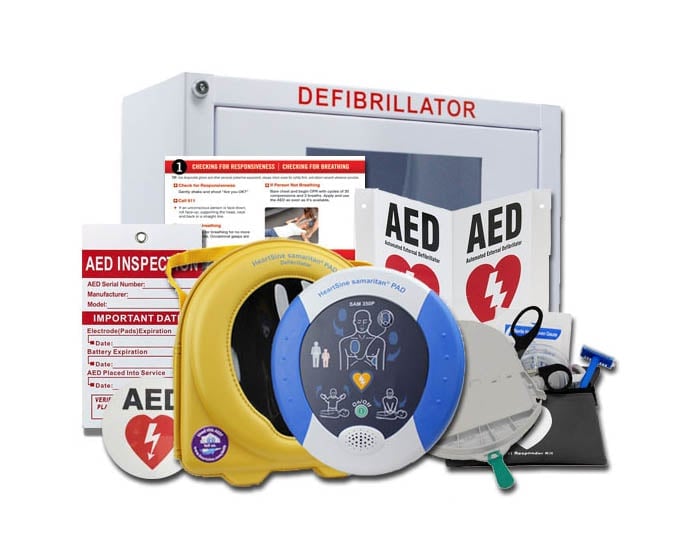
HeartSine Samaritan 350P AED Package
Compact, fully-automatic AED designed for first-time responders. Pads, battery, carry case and wall sign included.
Child CPR
Sudden cardiac arrest is rare in kids, but it still affects thousands each year. In the United States, more than 20,000 infants and children have cardiac arrest each year. About 7,000 of these cases happen outside of hospitals.
Once you check that the area is safe, help the child. Follow the right steps based on their age and condition:
1. Begin CPR.
If a child is unresponsive, not breathing normally, and shows no signs of life, start CPR right away. Don’t pause to check for a pulse. If someone else is present, ask them to call 911. If you’re alone with a phone, call immediately. Without one, begin CPR and complete five cycles before seeking help.
2. Call 911
Call 911 to report the emergency and try to retrieve an AED if one is available nearby.
If a child is unconscious due to a blocked airway, don’t put your fingers in their throat. This can make things worse. Only remove visible obstructions from the mouth when it’s safe to do so.
3. Push—begin CPR.
The child’s age and size guide how chest compressions should be given. For younger kids, use one or two hands. Press about 2 inches deep, but don’t go deeper. In teenagers, compressions can reach a depth of up to 6 centimeters without causing harm.
Children, like adults, need chest compressions at a rate of 100 to 120 per minute during CPR.
4. Rescue Breaths
Rescue breathing means tilting the person’s head back gently. Then, breathe into their mouth so that air can reach their lungs.
Keep in mind that a child’s lungs are smaller than an adult’s, so gentle breaths are essential. The American Heart Association stresses that rescue breaths are crucial for children. Cardiac arrests often occur from breathing problems like choking or asthma, not heart issues. To ensure effective breaths, pinch the nose and create a tight seal over the child’s mouth.
When alone, give two rescue breaths after every 30 compressions. With two rescuers, one provides two breaths for every 15 compressions done by the other.
Infant CPR
Infant CPR is for babies under one year old. It is different from CPR for older children and adults. After a child turns one, they follow the child CPR guidelines.
Like with child CPR, it’s crucial to begin compressions and rescue breaths right away. In most cases with infants, airway blockages cause cardiac arrest, not heart issues.
1. Check for consciousness.
After ensuring the area is safe, gently check if the baby is responsive. Never shake an infant. Instead, tap their foot or gently stroke their arm. Use enough pressure to wake them from sleep.
2. Call 911
If the infant shows no signs of life, call out for help. If no one is nearby, use your phone to contact 911 immediately.
3. Push—begin CPR.
Begin CPR without delay and complete five cycles. If you’re still alone and haven’t called 911, do so immediately after those cycles and try to get an AED if available.
4. Infant Chest Compressions
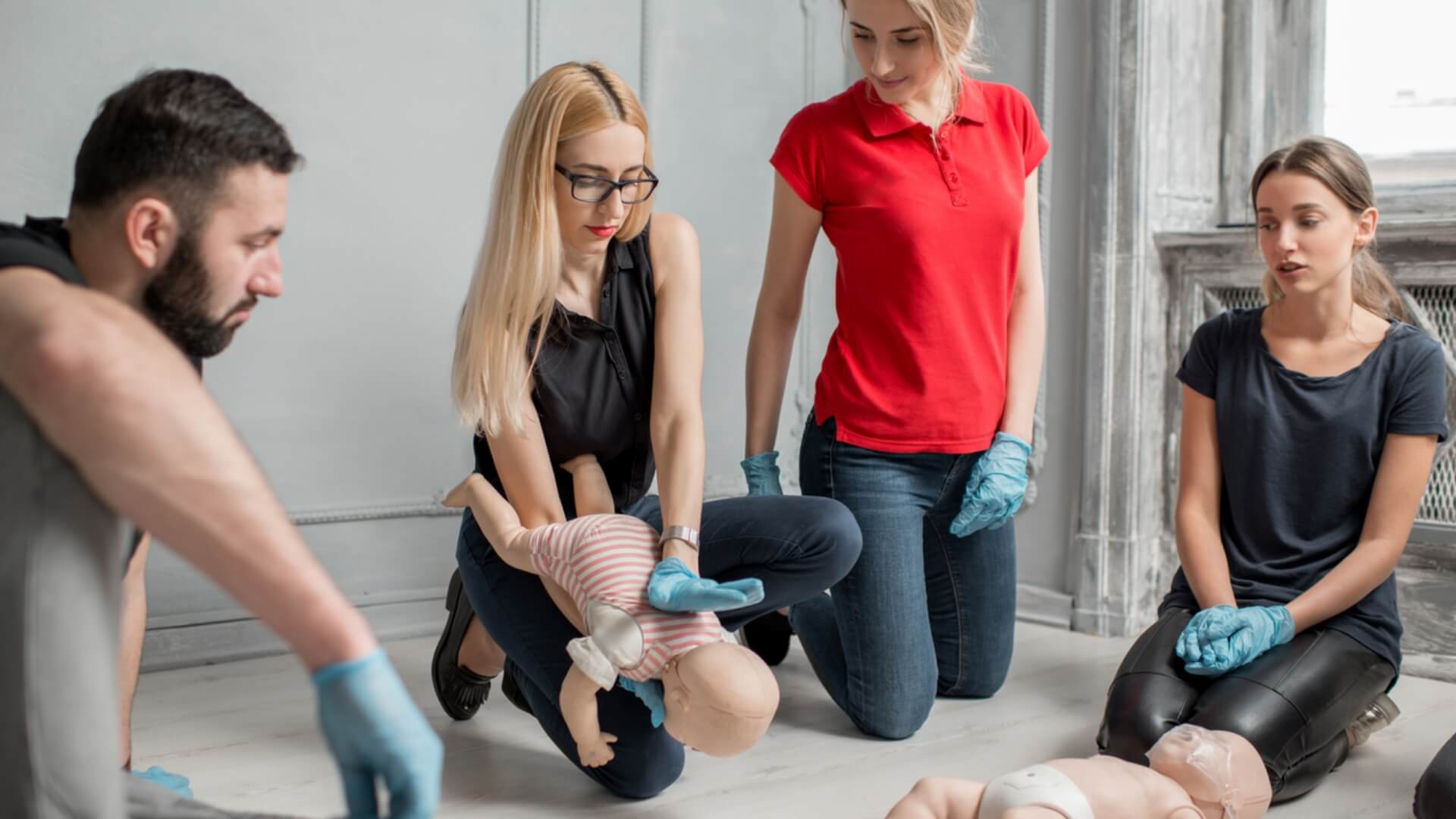
If an infant has no signs of life, begin CPR immediately. If you’re alone, use two fingers from your dominant hand to press about an inch and a half deep on the chest. With two rescuers, encircle the baby’s chest and use both thumbs for compressions. If needed, you may gently use the heel of your hand to reach the correct depth. Keeping a rhythm close to 100 to 120 beats per minute, like the tempo of “Stayin’ Alive,” can help guide your pace.
5. Rescue Breaths
An infant’s airway is small and delicate. So, don’t tilt the head too far back when giving a rescue breath. This helps keep the airflow clear.
To give a rescue breath to an infant, cover their mouth and nose with yours to seal it completely. Then, breathe in gently for one second until you see the chest rise. When alone, give two breaths after every 30 compressions. With another rescuer, provide two breaths after every 15 compressions.
FAQs
What is the correct infant CPR ratio for single rescuers?
For one rescuer, the infant CPR ratio is 30 compressions and then 2 rescue breaths. This keeps blood flowing and oxygen getting to the body until help arrives or the baby improves.
How is the infant CPR ratio different with two rescuers?
In a two-rescuer situation, the infant CPR ratio is 15 compressions and then 2 breaths. This allows for more oxygen delivery. This is key in infant CPR because breathing problems often cause cardiac arrest.
What is the proper way to give rescue breaths during infant CPR?
During infant CPR, place your mouth softly over the infant’s mouth and nose to create a complete seal. Give a rescue breath lasting one second—enough to see the chest rise. Avoid over-inflating the lungs, as infants have smaller, more delicate airways.
Can I use the same CPR technique for infants and children?
No, child CPR and infant CPR have different techniques due to differences in size and anatomy. For infants, use two fingers or thumbs for compressions. For children, use one or two hands based on their size.
How deep should chest compressions be for infants?
Compressions during infant CPR should be about 1.5 inches deep. Use gentle but firm pressure with two fingers (if you’re alone) or two thumbs (if you have a partner). This helps you reach the right depth without hurting anyone.
What song can help keep the right rhythm during infant CPR?
A great way to maintain the correct compression tempo is 100 to 120 beats per minute.
Ideal for infant CPR is to use the beat of the song “Stayin’ Alive” by the Bee Gees. It helps to keep a steady and effective pace.
Why are rescue breaths so important in infant CPR?
Infants usually experience cardiac arrest from airway blockage or trouble breathing, unlike adults. Infant rescue breaths are key in infant CPR. They help get oxygen flowing until help arrives.
Do I need to take a class to learn infant CPR?
Yes, we highly recommend taking infant CPR classes. You’ll learn the right techniques in a hands-on way. These classes cover infant CPR ratios and safe rescue breathing. They help you respond confidently in emergencies.

Not sure which AED or training fits your needs?
An MDSI medical-oversight expert walks you through it — no obligation.
Talk to an expert →Conclusion
Learning infant and child CPR can save lives in emergencies. Every step counts in CPR, from knowing the right ratios to giving safe rescue breaths. This is crucial when seconds matter. This guide shares important information. Yet, the best way to gain confidence and skills is to take certified infant CPR classes. Preparing now means being ready to act when it matters most.