
When someone’s heart stops, the urgency of time becomes paramount. Doing CPR right away can save a life. It greatly boosts the chances of survival. Starting CPR immediately can potentially double or even triple those odds. That’s why being prepared to respond in those first few moments is so important. This guide offers a clear and effective approach to performing CPR when it matters most.
- Check Safety and Response: Before doing anything else, quickly assess the area to ensure it’s safe to approach. Once it’s clear, check if the person is responsive and breathing normally.
- Call 911: Call emergency services right away. Describe the situation clearly so they know what to expect when they arrive.
- Check the Airway: Gently tilt the head back and lift the chin to open the airway, then look and listen for normal breathing.
- Give Breaths: If the person isn’t breathing, give rescue breaths. Seal their mouth well. Make sure their chest rises with each breath.
- Do Chest Compressions: Begin chest compressions with a steady rhythm. Press down hard about two inches deep at a rate of 100 to 120 beats per minute.
- Repeat CPR Cycles: Continue with 30 compressions, then give 2 breaths. Repeat this cycle until help arrives or the person starts to recover.
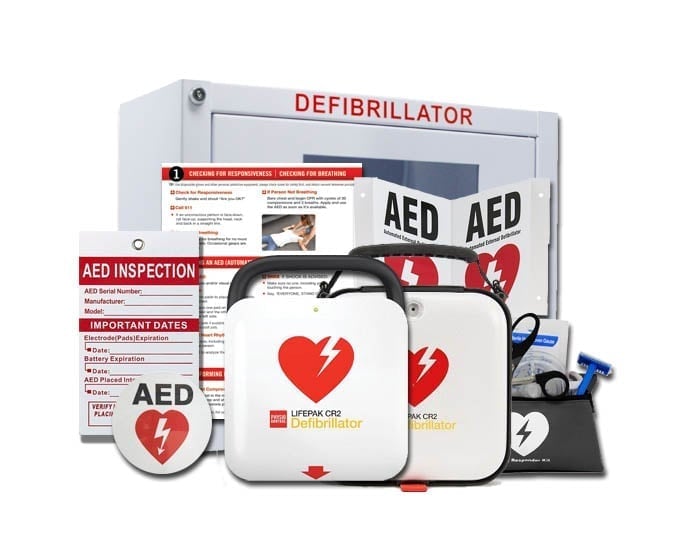
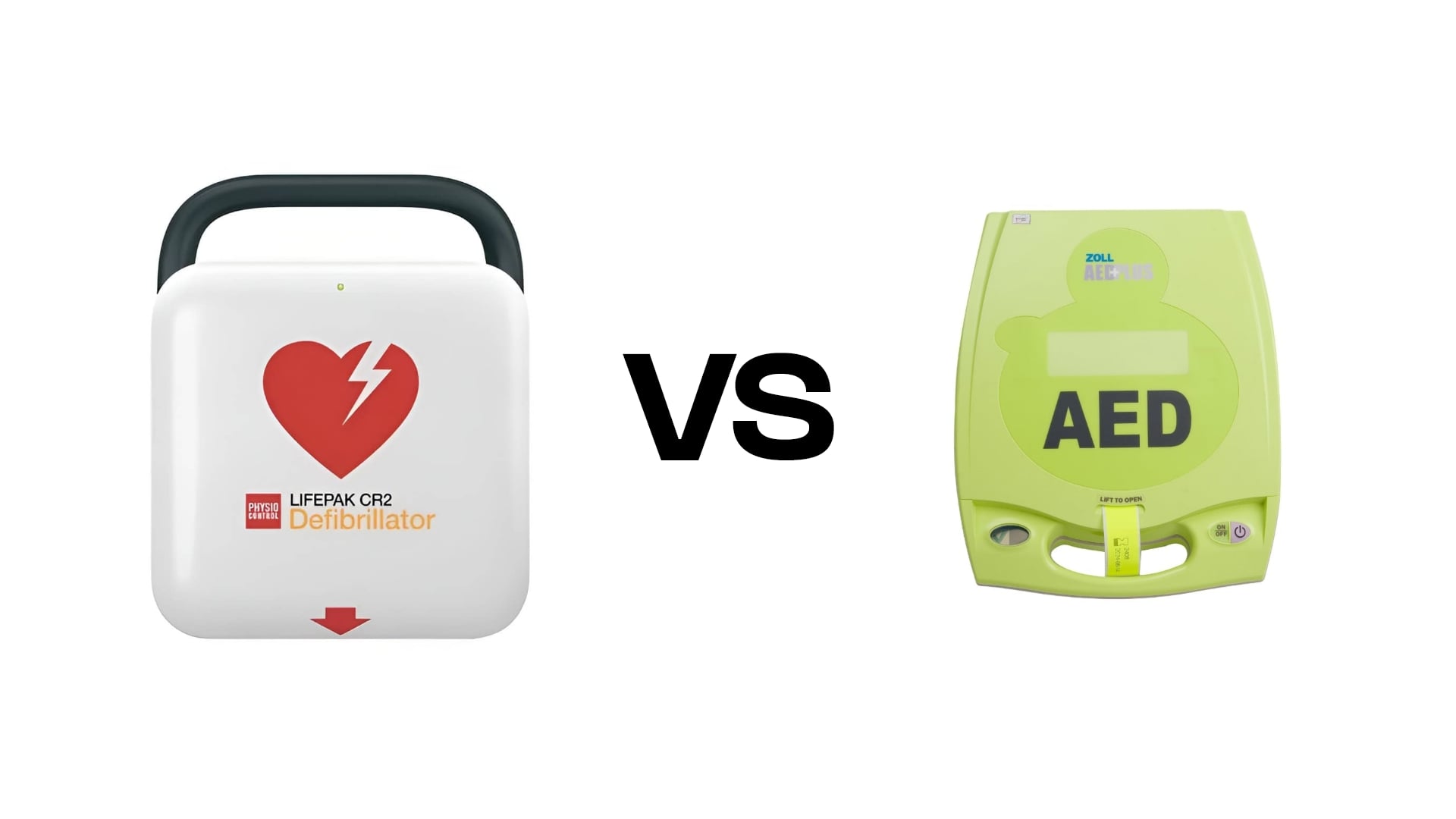
- Use an AED: Use an AED right away if you have one. Follow the instructions and keep doing CPR without delay.
Quick action is vital. Brain damage can begin within three minutes without circulation. By mastering these steps and getting certified, you’re ready to help when it matters.
1. Check safety and response
Assess the area
First, check the area for dangers. Stay alert for anything that could threaten your safety.
- Moving traffic near a car accident.
- Exposed electrical wires or live equipment.
- Unstable buildings or machinery.
- Aggressive individuals or escalating situations.
- Standing water that could be electrically charged.
If you see a car accident, pull over to the side of the road. Then, call emergency services. Stay in your car until they arrive.” – DefibsPlus
Make sure power sources are off and machines have stopped. Approach only when it’s safe, then check for a response from the person.
Check for Responsiveness
Approach from the front, gently tap the shoulder, and ask if they’re okay. Check for normal breathing, but don’t take more than 10 seconds.
- If there’s no response and breathing seems abnormal, start CPR immediately.
- If a person is breathing but unconscious, put them in the recovery position. This keeps their airway open. Stay with them until help arrives.
If the person doesn’t respond and isn’t breathing normally, start CPR right away. Don’t wait.
Get certified in CPR
CPR & AED Training
3-hour in-person training with a 2-year nationally recognized certification.
CPR, AED & First Aid Certification
Instructor-led on-site. Practice on real manikins and AED trainers.
2. Call 911.
Making the emergency call
Once you’re sure the area is safe and there’s no response, call 911 immediately. Stay calm and communicate clearly to ensure help arrives quickly.
Here’s what to tell them:
- Location: Provide the exact address, nearby landmarks, or specific building details.
- Type of emergency: Mention the need for CPR and the person’s unresponsiveness.
- Condition: Share details about breathing, pulse, or visible injuries.
- Callback number: Give a phone number where you can be reached.
- Access instructions: Include details like gate codes or directions to reach the location.
“To hurry help, prepare with the following information and use a clear, calm voice.” Take a deep breath while calling to focus and calm yourself.” – Sean Ewen, Founder and Executive Director of Allied Medical Training
Stay on the line with the dispatcher. They will guide you through CPR until help arrives.
Speed Saves Lives
In a CPR emergency, quick action is key. A faster response boosts the chances of survival.
| Response Time | Impact on Survival |
|---|---|
| Within 2 minutes | Up to 81% higher chance of survival with hospital discharge and 95% lower risk of brain damage |
| Within 10 minutes | 19% higher survival rate and 22% better brain protection compared to no CPR |
“Timing is crucial during a cardiac arrest. Delayed help can be as useless as no help at all.” Community education and empowerment are critical for us to save lives.” – Dr. Anezi Uzendu, Interventional Cardiologist at UT Southwestern Medical Center
If you’re alone, call 911 right away. But if it’s a drowning or overdose, do CPR for two minutes first, then call. In the U.S., hundreds of thousands of cardiac arrests happen outside hospitals every year. Quick action can save lives.
Once help is on the way, check the airway and get ready to start CPR without delay.
3. Check the airway.
Opening the airway
To do CPR well, first open the airway. Use the head-tilt and chin-lift method. This stops the tongue from blocking the airway.
Here’s how to do it:
- Position one hand on the forehead and the other beneath the chin, being careful not to press on any soft areas.
- Tilt the head back slightly while lifting the chin forward to clear the airway.
If the chest doesn’t rise, reposition the head and ensure a proper seal before giving another breath.
Look for breathing.
Check for breathing with the airway open. Look at the chest, listen for breath sounds, and feel for airflow. Do this within 10 seconds.
Be alert for any signs that suggest the person is having difficulty breathing.
- Faster breathing than normal.
- Bluish lips or fingernails.
- Grunting when exhaling.
- Flaring nostrils
- Chest pulls inwards with each breath.
- Sweaty, cool, or clammy skin
- Wheezing or whistling noises.
If normal breathing is absent, start rescue breaths. If the chest doesn’t rise, reposition the head and check for any airway blockage.
4. Give Breaths
Mouth-to-Mouth Rescue Breathing Steps
Rescue breaths provide vital oxygen to keep someone alive. Exhaled air has about 17% oxygen.
For adults and older children:
- Tilt the head back and lift the chin to open the airway.
- Pinch the nose shut.
- Place your mouth over the victim’s mouth, creating a tight seal.
- Breathe steadily into their mouth for one second and watch for the chest to rise.
- Deliver a second breath.
- If the chest isn’t rising, do this: adjust the head position. Ensure the seal is tight. Check for blockages in the airway. Avoid sweeping the mouth blindly[26, 28].
For infants:
- Keep the head in a neutral position.
- Cover both the nose and mouth with your mouth.
- Breathe steadily for one second while checking for chest movement.
- Follow with a second breath.
Safety Devices
Using a barrier during rescue breaths helps reduce the chance of infection transmission.
| Device Type | Features | Average Cost |
|---|---|---|
| CPR Keychain Shield | Portable; includes gloves | $5.25 |
| Mini Face Shield | Compact and easy to carry | $3.40 |
| Adult/Child Mask | Offers professional-grade protection | $6.50–$11.50 |
Use the barrier device as the manufacturer says. Keep the head in the right position. Continue CPR with a 30 to 2 compression-to-breath ratio.
How to Perform CPR on Adults & Infants
RECOMMENDED
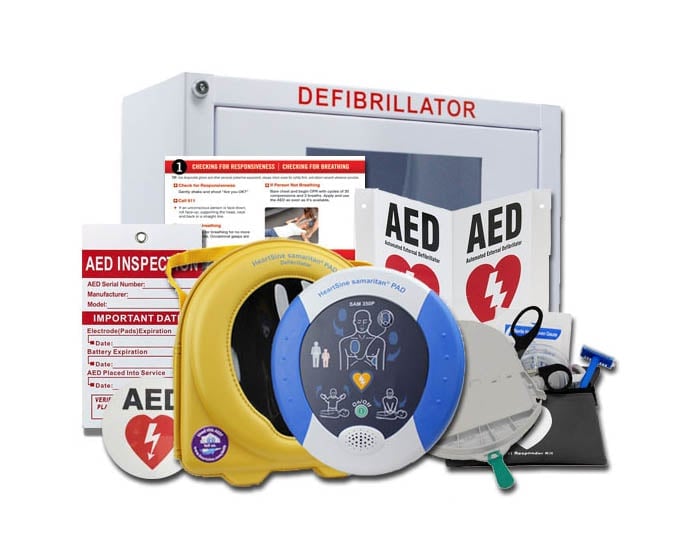
HeartSine Samaritan 350P AED Package
Compact, fully-automatic AED designed for first-time responders. Pads, battery, carry case and wall sign included.
5. Do Chest Compressions
After rescue breaths, chest compressions are vital. They help keep blood flowing in the body.
Hand Position
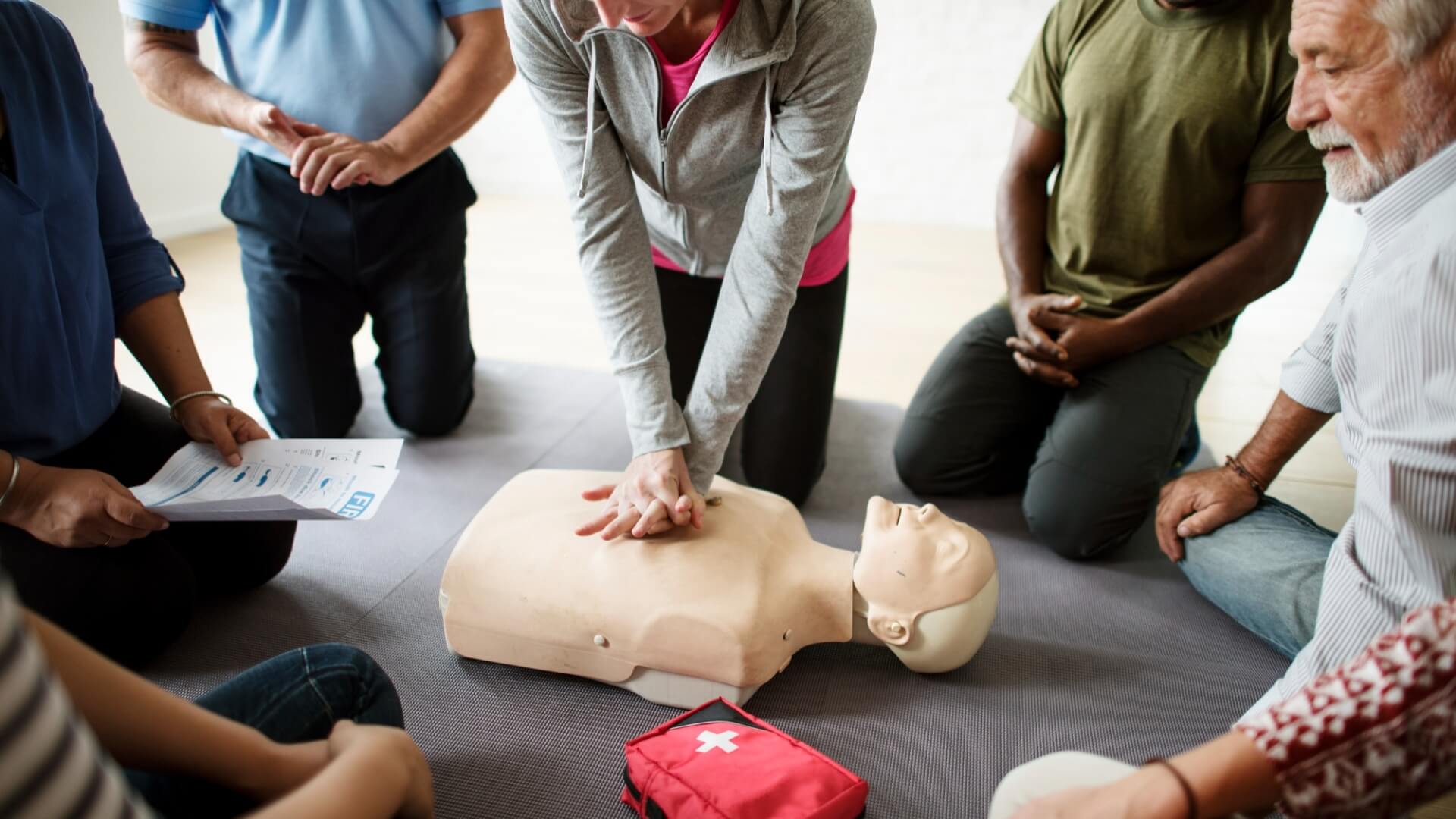
- For adults: Put the heel of your dominant hand on the center of their chest. Then, place your other hand on top. Lock your fingers, but don’t touch your chest. Keep your arms straight. Align your shoulders over your hands.
- For children: Use one hand in the center of the chest.
- For infants: Use two fingers placed in the center of the chest.
Compression Technique
Delivering proper CPR can make all the difference.
- Ensure the person is on a firm, flat surface.
- Aim for 100–120 compressions per minute.
- For adults, press down about 2 inches (but no more than 2.4 inches).
- Let the chest fully rise between compressions, and avoid unnecessary pauses.
Struggling with the rhythm? Certain songs naturally match the perfect pace for chest compressions.
| Song Title | Artist | BPM | Notes |
|---|---|---|---|
| Stayin’ Alive | Bee Gees | 103 | A classic for CPR training |
| Dancing Queen | ABBA | 100 | Simple and memorable |
| Just Dance | Lady Gaga | 119 | A modern option |
| Imperial March | John Williams | 103 | An instrumental choice |
Age-Based Guidelines
Chest compression techniques differ based on the person’s age:
| Age Group | Hand Position | Compression Depth | Special Considerations |
|---|---|---|---|
| Adults | Two hands, interlocked | 2–2.4 inches | Use your body weight |
| Children | One hand | 1/3 chest depth | Apply less force |
| Infants | Two fingers | 1/3 chest depth | Use gentle pressure |
Most modern AEDs come with built-in metronomes to guide the proper compression rate.
“Immediate CPR can double or triple chances of survival after cardiac arrest.” – American Heart Association
Continue CPR until professional help arrives and takes over.
6. Repeat CPR Cycles
Here’s how to keep CPR effective in a real emergency.
30:2 ratio
For adults, give 30 compressions. Then, provide 2 breaths to help circulation and oxygen flow. Maintain a steady rhythm, allow the chest to recoil completely, and end pauses.
According to the National Institutes of Health, the ideal rate is about 107 compressions per minute with a depth of roughly 1.85 inches for optimal effectiveness.
Keeping Rhythm
Take a quick 10-second break after every 100 compressions. This helps keep the compression depth steady and lowers fatigue.
| Duration | Action | Purpose |
|---|---|---|
| 2 minutes | Perform compressions | Ensure blood circulation |
| 10 seconds | Take a short rest | Avoid exhaustion |
| 100–120 beats/min | Maintain compression rate | Optimize blood flow |
Tips for consistent, high-quality CPR:
- Use your body weight instead of arm strength.
- Keep your arms straight, with your shoulders positioned over your hands.
- Switch rescuers every 2 minutes if possible.
- Use a metronome app set between 100 and 120 beats per minute to stay on pace.
Keep doing CPR until the person gets better, help comes, or you can’t go on. If they wake up but then collapse again, start CPR right away. Continue until someone uses an AED or help arrives.
7. AED Usage
An AED can be a lifesaver in emergencies. Use it right away if someone:
- Has collapsed without warning.
- Is unresponsive
- Has irregular breathing.
When to Start
Begin CPR immediately if someone goes into cardiac arrest. Ask someone close by to get the AED. Once you have it, use it right away. Follow the voice instructions and give a shock if needed.
Following Instructions
AEDs provide clear voice instructions to guide you through each step. Here’s how to respond.
| Step | Action | Key Safety Points |
|---|---|---|
| Preparation | Turn on the AED and remove clothing | Make sure the chest is completely dry. |
| Pad Placement | Place the pads on the bare chest | Position one pad on the upper right, the other on the lower left side. |
| Analysis | Let the AED analyze the heart rhythm | Ensure no one touches the patient during this process. |
| Shock Delivery | Press the shock button if advised | Announce “CLEAR!” to confirm no one is in contact with the patient before pressing the button. |
| Continue Care | Resume CPR immediately | Start with chest compressions. |
Key safety tips:
- Look for a green light on the AED to confirm it’s ready to use. A red light signals it needs maintenance.
- Use pediatric pads for children under 8 if they’re on hand.
- Avoid any contact with the person while the AED analyzes or delivers a shock.
“CPR is the most important action for a patient in cardiac arrest. It should continue until a defibrillator is available. This helps reduce breaks in compressions.” – American Heart Association
If the AED doesn’t work, keep doing CPR until medical help arrives. Regular monthly checks help make sure the device is ready when it’s needed most.
Next Steps
Get certified in CPR, then stay ready by practicing regularly.
Get Certified
Groups like the Red Cross and American Heart Association provide CPR certification. This training helps you feel ready to act in emergencies. With so few Americans trained annually, learning CPR is more important than ever.
Here are a few options for certification:
| Organization | Course Type | Cost | Features |
|---|---|---|---|
| Health & Safety Institute | BLS, CPR, AED & First Aid | Varies | 3rd most recognized brand and budget friendly |
| American Red Cross | Blended Learning | Varies | Mix of online and hands-on training |
| American Heart Association | Healthcare Provider BLS | Varies | Leader in resuscitation training |
Earning certification is the first essential step toward building effective emergency response skills.
Emergency Readiness
Staying ready for emergencies takes ongoing work. You need to keep learning and practice key skills often.
- Brain damage can start in three minutes without blood flow. Yet, doing CPR right away can greatly increase survival chances.
- Proper CPR can save nearly 200,000 lives each year in the U.S.
Regular practice keeps your skills sharp. It also builds the confidence to act quickly in emergencies.
Basic Life Support (BLS) courses provide healthcare professionals with training. This helps them handle serious situations that go beyond regular CPR in clinics.
FAQs
What is the difference between CPR and basic life support (BLS)?
CPR is a key life-saving skill. It’s used in emergencies when a person stops breathing or their heart stops. BLS, which stands for basic life support, is advanced training for healthcare workers. It prepares them to handle urgent medical emergencies in clinical environments.
How soon should CPR begin after cardiac arrest?
CPR should begin immediately when someone is unresponsive and not breathing normally. Act fast! Brain damage can start in three minutes without blood flow.
When should an AED be used during CPR?
Use an AED as soon as it’s available. Turn it on and follow the voice prompts. Then, start CPR right after shocking or as the device instructs.
Why is ongoing CPR training important?
Regularly reviewing and practicing keeps your skills sharp. This also boosts your confidence to respond quickly in real emergencies. Staying prepared could make a life-saving difference.
Not sure which AED or training fits your needs?
An MDSI medical-oversight expert walks you through it — no obligation.
Talk to an expert →Conclusion
CPR is a critical skill that can make the difference between life and death in an emergency. To be ready when every second counts, respond without delay. Use the appropriate techniques and maintain a regular training schedule. No matter if you’re a healthcare worker or worried about others, learning CPR lets you help save lives.