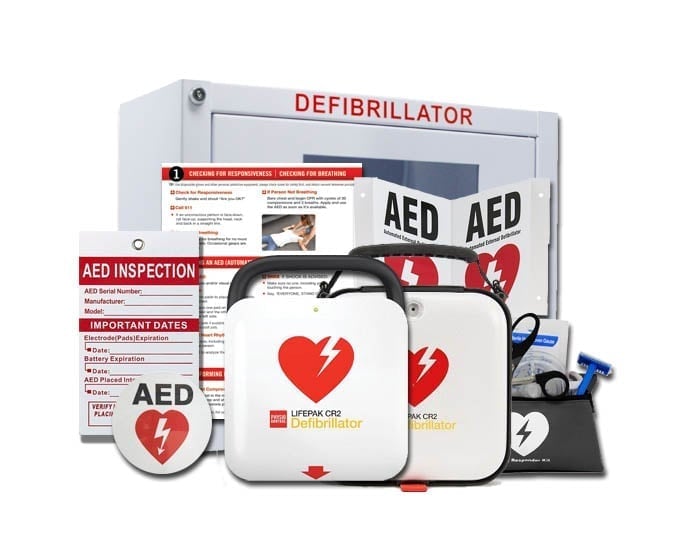

AED for Home: The 2026 Buyer’s Guide
Four out of five sudden cardiac arrests happen at home. The right Automated External Defibrillator can be the difference between life and loss. This guide compares the best home AEDs, explains prescription rules, and shows you what to look for before you buy.
Key Takeaways
- Home AEDs cost between $1,478 and $2,750. Most quality options sit in the $1,500 to $2,100 range.
- The Philips HeartStart OnSite is the only AED FDA-approved for over-the-counter purchase, so no prescription is required.
- Every other home AED needs a physician’s prescription. MDSI provides this with every order.
- You can pay for a home AED with FSA, HSA, or HRA funds.
- No medical training is needed. Every model uses voice prompts to walk you through the rescue.
Why You Need an AED at Home
Sudden cardiac arrest is the leading cause of death in the United States. It claims roughly 325,000 lives each year, and most of those events happen far from a hospital. With every minute that passes without defibrillation, a victim’s chance of survival drops by 7 to 10 percent.
The numbers tell the story:
- 70% of cardiac arrests happen at home
- Survival drops 10% for every minute without defibrillation
- EMS response time averages 8 to 10 minutes
- Survival rates double when an AED is used early
By the time paramedics arrive, the window for a meaningful rescue has often closed. A home AED bridges that gap. When defibrillation happens within the first three to five minutes, survival rates climb from roughly 10% to over 50%.
Who Benefits Most from a Home AED
A home AED makes the biggest difference for these households:
- Households with cardiovascular risk factors. Heart disease, prior cardiac events, high blood pressure, diabetes, or family history of sudden cardiac arrest.
- Families with elderly parents living at home or in a multi-generational household.
- Remote workers and home offices. With millions of Americans now working from home, the workplace safety net is gone.
- Rural homes where EMS response can take 15 minutes or more.
- Active households with home gyms, pools, or aging parents who exercise regularly.
How a Home AED Works
An Automated External Defibrillator is a portable, battery-powered medical device. It analyzes a person’s heart rhythm. If it detects a life-threatening arrhythmia like ventricular fibrillation or pulseless ventricular tachycardia, it delivers a controlled electrical shock to restore a normal heartbeat.
Modern home AEDs are designed for users with no medical training. After you place the electrode pads on the patient’s bare chest, the device automatically:
- Analyzes the heart rhythm
- Determines if a shock is needed
- Charges and either delivers the shock automatically (fully automatic) or prompts you to press a button (semi-automatic)
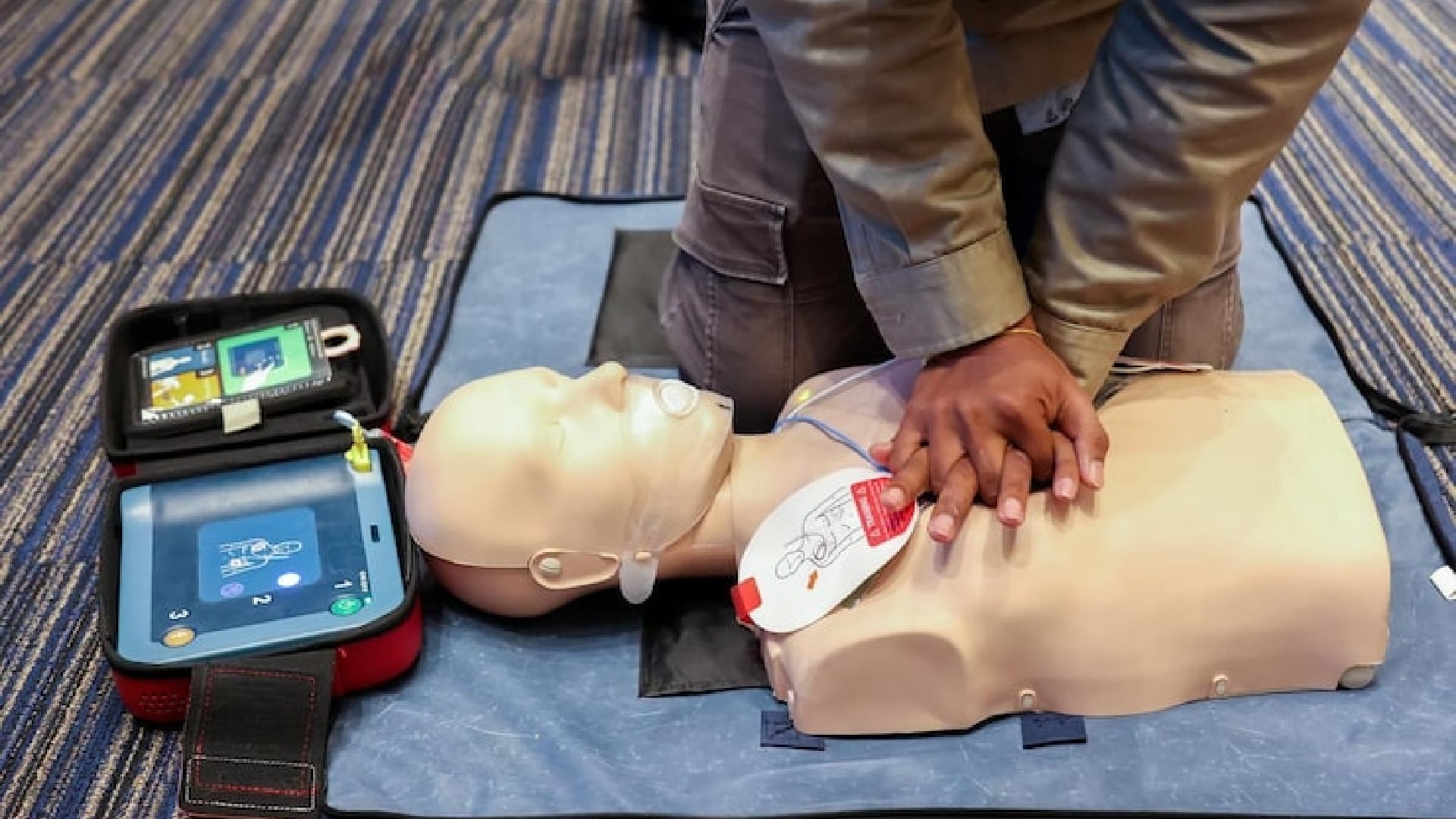
- Guides you through CPR with voice prompts
Important: An AED will only deliver a shock when the patient’s heart rhythm requires one. It is impossible to accidentally shock a person who does not need defibrillation. This is why the FDA approves these devices for use by laypeople.
Do You Need a Prescription to Buy a Home AED?
This is the single most common question buyers ask. The answer depends on the model.
The Exception: Philips HeartStart OnSite
The Philips HeartStart OnSite is the only AED currently FDA-approved for over-the-counter purchase for personal home use. You can buy it without a doctor’s prescription. That makes it the simplest path to home protection.
Other Models Need a Prescription (We Provide It)
All other models require a physician’s prescription under FDA rules. This includes the ZOLL AED 3, Defibtech Lifeline, LIFEPAK CR2, and Philips HeartStart FRx. That sounds like an obstacle, but it isn’t.
MDSI provides the prescription for you. As a national AED program provider since 1997, our medical oversight team writes the required physician authorization with every device we sell. You don’t need to schedule a doctor’s visit, and you don’t need a pre-existing condition.
State registration: Some states require AED owners to register their device with local EMS. We help you complete that paperwork at no extra charge as part of our oversight services. Learn more about MDSI’s AED program support.
What to Look for in a Home AED
Six features separate a great home AED from a passable one. Here’s what to prioritize.
Ease of Use Under Stress
In a real emergency, panic clouds judgment. Look for one-button or pull-handle activation, large icons, and calm step-by-step voice prompts. The simpler the interface, the more likely a frightened bystander will use it correctly.
CPR Coaching
Effective chest compressions are as important as the shock itself. Basic AEDs play a metronome to pace your compressions. Premium models like the ZOLL AED Plus and ZOLL AED 3 use sensor pads to measure actual compression depth and give real-time corrections. This feature can dramatically improve outcomes for untrained rescuers.
Pediatric Capability
If children live in or visit your home, choose a device that supports pediatric pads or has a built-in child mode. The Philips HeartStart FRx and LIFEPAK CR2 include lifetime pediatric capability. The OnSite uses separate child pads.
Self-Testing and Readiness Indicator
Every quality home AED runs daily, weekly, and monthly self-tests on its battery, pads, and circuitry. A status light or visible indicator lets you confirm readiness in two seconds, without opening the case.
Battery and Pad Life
Long-lasting consumables save you money over the device’s lifespan. Look for batteries rated for 4 to 7 years and pads rated for 2 to 5 years.
Warranty
The industry standard is an 8-year manufacturer warranty. Anything shorter is a red flag. All AEDs MDSI sells include the full 8-year coverage.
The Best AEDs for Home Use in 2026
MDSI is an authorized distributor for every major FDA-approved AED brand. These are the six models we recommend most often for home buyers, ranked by best fit rather than price alone.
Philips HeartStart OnSite (No Prescription Needed)
Price: $1,529 to $1,799
The most popular home AED in the U.S. and the only model FDA-cleared for over-the-counter sale. Pull the green handle to activate, and the device walks you through every step with calm, clear voice prompts.
- Weight: 3.3 lbs
- Warranty: 8 years
- Pad life: 2 years
- Battery: 4 years
Best for: First-time buyers who want simplicity and no paperwork. Trade-off: No real-time CPR depth feedback. Uses metronome only.
View the OnSite Value Package.
Defibtech Lifeline AED (Best Budget Home AED)
Price: $1,478 to $1,659
The most affordable FDA-approved AED on our shelves. A two-button interface keeps operation simple. A daily self-check gives you visible confidence the device is rescue-ready.
- Weight: 4.2 lbs
- Warranty: 8 years
- Pad life: 2 years
- Battery: 5 or 7 years
Best for: Cost-conscious buyers who want reliable performance without premium features. Trade-off: No CPR feedback. Requires prescription, which MDSI provides.
ZOLL AED Plus (Best CPR Feedback)
Price: $2,082
ZOLL’s signature Real CPR Help technology measures the depth and rate of your chest compressions through a sensor pad and gives real-time verbal corrections. For households with no CPR training, this coaching feature is invaluable.
- Weight: 6.7 lbs
- Warranty: 7 years
- Pad life: 5 years
- Battery: 5 years (consumer lithium)
Best for: Families who want maximum CPR coaching for untrained rescuers. Trade-off: Heavier than other options.
Philips HeartStart FRx (Most Rugged)
Price: $2,010 to $2,159
The FRx is built tough. It is IP55-rated against dust and water, which makes it the right choice if you want to take the AED to a vacation home, RV, boat, or outdoor space. Lifetime pediatric capability via a single key, no separate pads required.
- Weight: 3.5 lbs
- Warranty: 8 years
- Pad life: 2 years
- Battery: 4 years
Best for: Active families, vacation homes, outdoor use, households with children. Trade-off: Costs more than the OnSite for similar core features.
ZOLL AED 3 (Real-Time Visual Feedback)
Price: $2,307
The flagship ZOLL home and office AED. Combines Real CPR Help with a full-color touchscreen, child mode, and integrated rescue support. The display visualizes compression depth so you can see, not just hear, whether you’re doing it right.
- Weight: 5.5 lbs
- Warranty: 8 years
- Pad life: 5 years
- Battery: 5 years
Best for: Buyers who want the most advanced rescue guidance available. Trade-off: Higher price point.
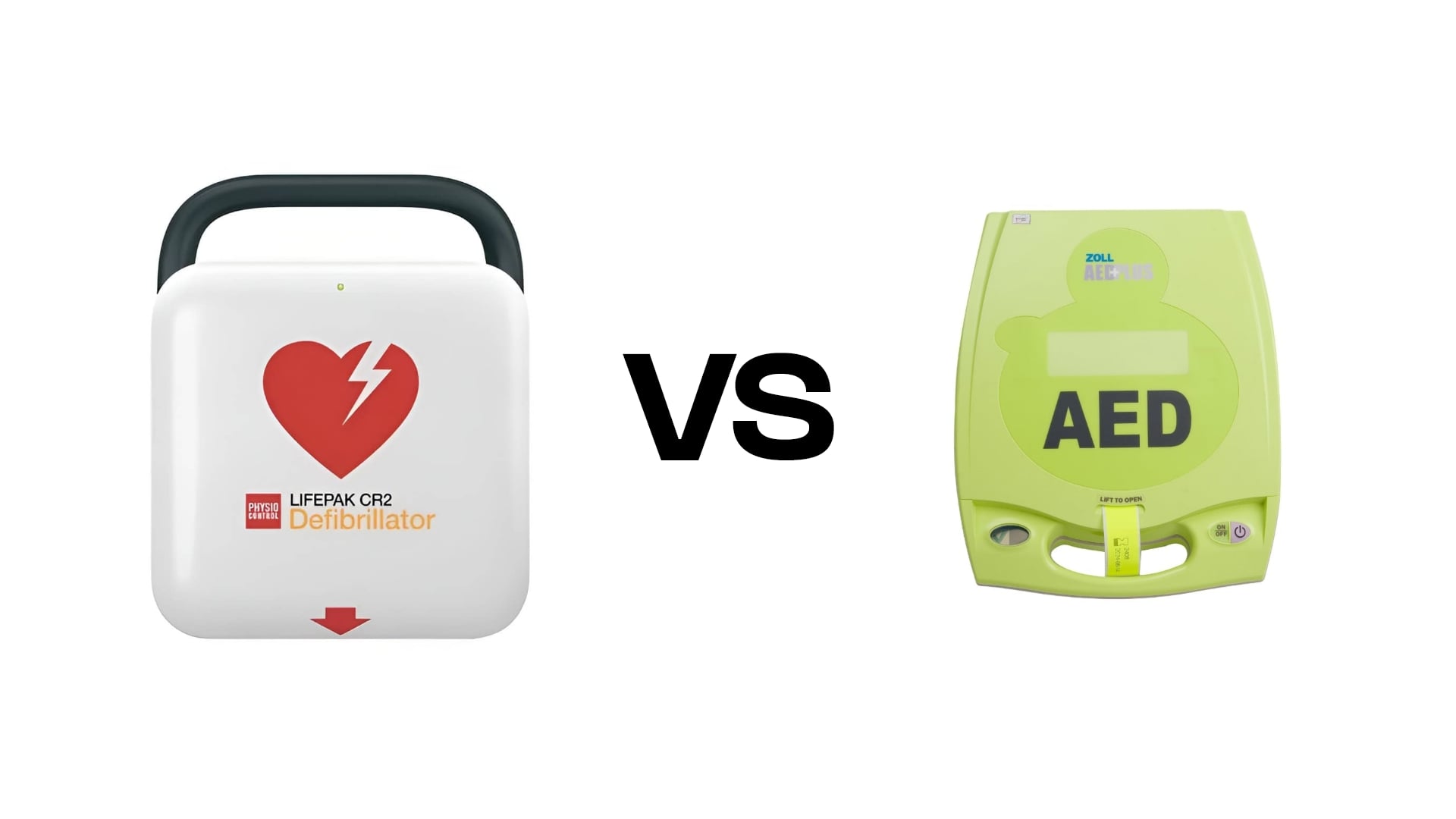
Physio-Control LIFEPAK CR2 (Premium Pick)
Price: $2,376 to $2,741
The CR2 stands out with cprINSIGHT technology. It analyzes the heart rhythm during CPR, which eliminates the pause for analysis and keeps circulation going. QUIK-STEP pads switch between adult and child mode at the press of a button.
- Weight: 4.5 lbs
- Warranty: 8 years
- Pad life: 4 years
- Battery: 4 years
Best for: Buyers who want best-in-class technology and don’t mind paying for it. Trade-off: The most expensive option in this lineup.
Home AED Comparison Chart
Use this table to narrow your shortlist. Prices reflect current MDSI retail before any active discount codes.
| Model | Starting Price | Prescription | CPR Feedback | Pediatric | Weight |
|---|---|---|---|---|---|
| Philips HeartStart OnSite | $1,529 | Not required | Metronome | Separate pads | 3.3 lbs |
| Defibtech Lifeline | $1,478 | Required (provided) | Metronome | Separate pads | 4.2 lbs |
| ZOLL AED Plus | $2,082 | Required (provided) | Real-time depth and rate | Pedi-Padz II | 6.7 lbs |
| Philips HeartStart FRx | $2,010 | Required (provided) | Metronome | Built-in key | 3.5 lbs |
| ZOLL AED 3 | $2,307 | Required (provided) | Real-time visual and audio | Built-in mode | 5.5 lbs |
| LIFEPAK CR2 | $2,376 | Required (provided) | cprINSIGHT analysis | QUIK-STEP pads | 4.5 lbs |
How Much Does a Home AED Cost?
The honest answer: more than people expect, but less than most assume after they’ve done the research. Most quality home AEDs land between $1,478 and $2,750, depending on brand and feature set.
Total Cost of Ownership Over 10 Years
The sticker price is just the start. Plan for these recurring costs over the device’s typical 8 to 10 year service life:
- Replacement pads: $50 to $230, every 2 to 5 years
- Replacement battery: $100 to $310, every 4 to 5 years
- Pediatric pads (if needed): $90 to $170, every 2 years
- Optional medical oversight and tracking, available through MDSI’s program management services
Over a decade, budget roughly $300 to $700 in consumables on top of the initial purchase. Value packages, which we recommend, bundle the first set of accessories, the carrying case, and a first responder kit for less than buying piecemeal.
Paying for a Home AED with FSA, HSA, or HRA
An AED qualifies as an eligible medical expense under IRS Publication 502. That means you can purchase your home AED package with pre-tax dollars from a Flexible Spending Account, Health Savings Account, or Health Reimbursement Account.
For a buyer in the 24% federal tax bracket, that’s effectively a $370 to $650 discount on a typical home AED purchase. Save your MDSI receipt and submit it through your account administrator.
Home AED Maintenance and Lifespan
Home AEDs are remarkably low-maintenance. The device runs its own diagnostics. Your job is to watch the status indicator and replace consumables on schedule.
What You Actually Need to Do
- Check the readiness indicator weekly. A green light or check mark means everything is functional. If you see a warning, follow the on-device prompt.
- Replace pads on schedule. Pads have an expiration date printed on the package, typically 2 to 5 years from the manufacture date.
- Replace the battery on schedule. Most units alert you when the battery is approaching end of life. Don’t wait.
- Replace pads after every use. They are single-use and can’t be sterilized.
- Store between 32°F and 122°F. Avoid attics, garages, and unheated spaces in extreme climates.
MDSI customers who enroll in our tracking program receive automated email reminders for pad and battery expirations, so nothing slips through the cracks. Learn more about MDSI maintenance services.
Home AED Frequently Asked Questions
Do I need a prescription to buy an AED for home use?
Most AEDs require a physician’s prescription under FDA rules. The Philips HeartStart OnSite is the only AED currently approved for over-the-counter purchase for personal home use. For all other models, MDSI provides the required prescription with every purchase, so the process is handled for you.
How much does a home AED cost?
Home AEDs typically cost between $1,478 and $2,750, depending on brand, features, and whether you buy the device alone or as a value package with accessories. Long-term costs include replacement pads (every 2 to 5 years) and batteries (every 4 to 5 years).
Can I pay for a home AED with FSA or HSA funds?
Yes. According to IRS guidance and the FSA/HSA Store, an AED qualifies as an eligible medical expense. You can use a Flexible Spending Account, Health Savings Account, or Health Reimbursement Account to purchase a home AED package.
Do I need training to use a home AED?
No formal training is required. All FDA-approved home AEDs use voice prompts and visual guides to walk users through pad placement, rhythm analysis, and shock delivery. The device only delivers a shock when one is medically necessary. CPR training is recommended to maximize survival outcomes, and MDSI can connect you with certified training resources.
Which AED is best for home use?
The Philips HeartStart OnSite is widely considered the best AED for home use. It is the only model FDA-approved without a prescription, has simple voice guidance, and sits at a competitive price point. For families wanting real-time CPR feedback, the ZOLL AED Plus or LIFEPAK CR2 are stronger choices. The Defibtech Lifeline is the best budget pick.
How long does an AED last?
A quality home AED has a service life of about 8 to 10 years and includes an 8-year manufacturer warranty in most cases. Pads typically need replacement every 2 to 5 years, and batteries every 4 to 5 years.
Can children be shocked with a home AED?
Yes. AEDs are safe and effective on children, but they require pediatric pads or a pediatric mode for patients under 8 years old or 55 pounds. The Philips HeartStart FRx and LIFEPAK CR2 include lifetime pediatric capability built in. For other models, you can purchase pediatric pads separately.
Is it safe to use an AED if the patient has a pacemaker?
Yes, but the pads must be placed at least one inch away from any visible pacemaker bump under the skin. The AED’s voice prompts will guide you. Never delay defibrillation because of a pacemaker. The shock will not damage the device.
What’s the difference between a home AED and a hospital defibrillator?
Home AEDs are fully automated, lightweight (3 to 7 pounds), and designed for untrained users. Hospital defibrillators are manual devices that require a trained clinician to interpret heart rhythms and select shock parameters. The two are not interchangeable.
Ready to Be TimeZero® Ready at Home?
MDSI Medical has equipped thousands of homes, offices, and organizations across the U.S., U.S. Territories, and Canada since 1997. Free shipping, 8-year warranty, and prescription handled for you.
Disclaimer for information purposes only:
The information provided on this website is intended for general educational and informational purposes only. It is not medical advice and should not be used as a substitute for professional diagnosis, treatment, or care. Always consult a qualified healthcare or medical professional regarding any health-related questions or concerns.
While we strive to ensure the information shared is accurate and up to date, no guarantees are made regarding completeness, accuracy, or applicability to any individual situation. Use of this content is at the reader’s sole discretion and risk.
This website is part of the Response Ready family of emergency preparedness and training resources, including CPR & first aid training and compliance services, AED sales and program support, AED program management software, and medical oversight solutions provided through our affiliated platforms:
• CPR1.com
• AEDLeader.com
• AEDTotalSolution.com
• ResponseReady.com
By accessing or using this website, you agree to release, indemnify, and hold harmless the website owners, authors, contributors, and affiliated entities from any claims, losses, damages, or liabilities arising from the use or reliance on the information presented.

Save Lives with the Right AED Today
Buy Trusted AEDs Today!
Get Certified in CPR and Make a Difference!
Save Lives with the Right AED Today

- Published