

- Published
What Is Agonal Breathing? Learn How CPR vs. AED Can Save a Life

Agonal breathing is the irregular, gasping breaths seen when the body lacks oxygen. This typically happens in critical medical emergencies, like heart attacks or serious strokes. While it might appear that the person is trying to breathe, this reflex does not aid in respiration. It’s a last, instinctive push from the brain. It fights to work without enough oxygen.
Agonal breathing happens in life’s last moments. It shows that some brain activity is still present. CPR given in this phase boosts survival chances during cardiac arrest. This is better than when there is no agonal breathing.
What Causes Agonal Breathing?
Agonal breathing occurs when the brain lacks oxygen because blood flow has stopped. Oxygen gets to the brain through the blood. So, if something disrupts circulation, it can trigger a gasping reflex. This often happens during life-threatening emergencies.
Cardiac arrest is the top cause of agonal breathing. It happens when the heart stops beating unexpectedly. While often confused with a heart attack, the two are not the same. A heart attack happens when an artery gets blocked. This stops blood from reaching part of the heart. As a result, the heart tissue gets damaged. Sometimes, this can cause cardiac arrest.
Heart attack symptoms can develop over time. They may take hours, days, or even weeks to appear. Yet, in some cases, they can strike with suddenness and severe intensity. Unlike cardiac arrest, the heart continues to beat during a heart attack.
Cardiac arrest can occur without warning. An electrical problem disrupts the heart’s rhythm and causes it. The heart can’t pump blood to important organs. This may cause sudden unconsciousness. Without quick treatment, it can lead to death in minutes.
A heart attack increases your risk of cardiac arrest. Certain heart conditions can also cause cardiac arrest. So, early detection and treatment are very important.
- Cardiomyopathy occurs when thickening happens in your heart muscle.
- Heart failure
- Ventricular fibrillation, which is an abnormal heart rhythm,
- Long QT syndrome is another type of heart rhythm disorder.
An ischemic stroke happens when a blood vessel to the brain gets blocked. This stops essential oxygen from reaching the brain. As the most common form of stroke, it accounts for roughly 87% of all cases.
An anoxic brain injury occurs when the brain is deprived of oxygen due to restricted blood flow. Cardiac arrest and ischemic stroke are common examples. Other medical emergencies can also cause this kind of damage:
- Carbon monoxide poisoning
- Drowning
- Suffocation
- Choking
- Electrical shock
- Drug use
What are the symptoms of agonal breathing?
People who have seen agonal breathing describe it as:
- Barely breathing
- Occasionally breathing
- Problem breathing
- Irregular breathing
- Heavy breathing
- Labored breathing
- Sighing
- Noisy breathing
- Gurgling
- Moaning
- Groaning
- Snorting
What should you do if you see someone with agonal breathing?
If you see someone showing signs of agonal breathing, call emergency services immediately. The right first aid depends on what is causing the breathing issue.
If someone has a cardiac arrest, tell the dispatcher if they are gasping for breath. Agonal breathing is often mistaken for normal breathing, leading some to delay CPR. Yet, starting CPR during this phase can significantly increase the chance of survival.
If you suspect someone is in cardiac arrest, begin hands-only CPR without delay. Call 911 or get someone nearby to call, then push hard and fast in the center of the chest. Aim for 100 to 120 compressions per minute. You can match the beat of “Stayin’ Alive” to keep a good pace.
Don’t check for normal breathing or give mouth-to-mouth if a person is in cardiac arrest and gasping. Attempting rescue breaths in this situation can do more harm than good.
If a teenager or adult collapses suddenly, rescuers should do hands-only CPR. Traditional CPR with rescue breaths is better for certain cases. This includes infants and drowning victims.
- All infants.
- All children until puberty.
- Anyone is already unresponsive and not breathing normally.
- Use traditional CPR in cases such as drowning, drug overdose, severe breathing problems, or if cardiac arrest lasts a long time.
If someone is choking and can’t talk, cry, or breathe, act fast. Use the Heimlich maneuver or give back blows and abdominal thrusts to clear the blockage.
If someone is breathing strangely after almost drowning, call 911 right away. Start CPR by giving two rescue breaths, then do chest compressions. If someone vomits, turn them on their side. Then, clear their airway with your fingers or a cloth.
CPR and AED are both crucial for cardiac emergencies, but they have different roles. Understanding how they work and when to use them can make the difference between life and death.
What is CPR?
CPR is a lifesaving skill. It uses chest compressions to maintain blood flow during a sudden heart stoppage. It helps vital organs work and lowers the chance of brain damage while waiting for the heart to restart.
What does AED mean?
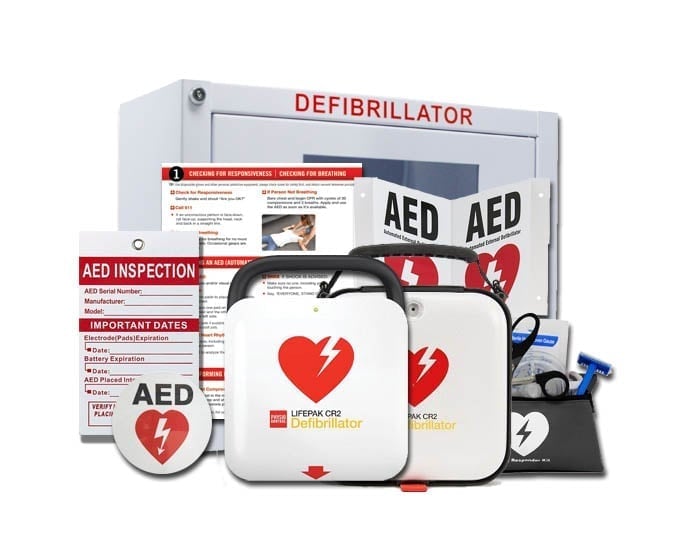
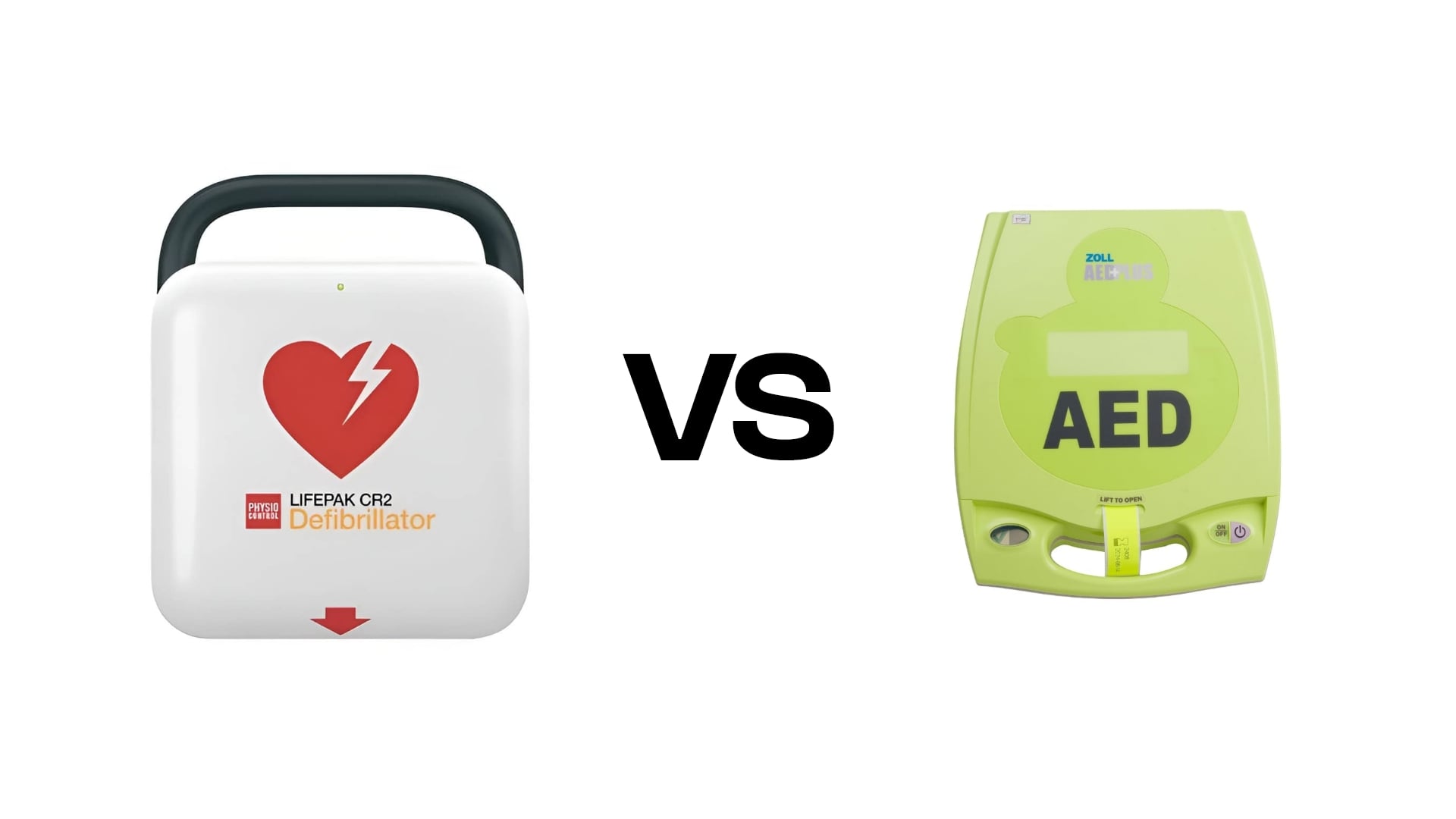
An AED, or Automated External Defibrillator, is a portable device. It checks the heart’s rhythm. If needed, it delivers a shock to restore a normal heartbeat during sudden cardiac arrest. AEDs are easy to use and need little training. They are often found in public places for quick access in emergencies.
AEDs perform heart rhythm checks without manual input. They only deliver a shock when they find serious issues. This includes problems like ventricular fibrillation or ventricular tachycardia. They won’t shock unless it’s necessary, making them safe to use even for those without medical training. Their simple design lets almost anyone help in a cardiac emergency with ease.
When to use AED vs. CPR
While both CPR and AED are vital in a cardiac arrest emergency, they serve different roles. CPR keeps blood and oxygen moving through chest compressions. An AED delivers a shock to help restart the heart’s rhythm. When used together, they significantly enhance the chances of survival.
When to Use an AED?
- Cardiac Arrest with No Pulse: If someone isn’t breathing normally and shows no response, suspect cardiac arrest. Use an AED right away. This can boost their chances of survival.
- After Starting CPR: Start CPR right away if you think someone is in cardiac arrest. As soon as an AED is available, turn it on and follow its voice and visual prompts. The device will assess the heart’s rhythm and deliver a shock only if it’s necessary.
When to Use CPR:
- Cardiac Arrest: If someone is unresponsive and not breathing or only gasping, begin CPR right away. This helps keep blood circulating to vital organs until emergency care can take over.
- Before AED Arrival: Start CPR immediately and keep going until the AED is available. Once it’s ready, follow the device’s instructions to continue care.
- If AED Is Not Available: Keep doing CPR if an AED isn’t available. Continue until emergency responders arrive or the person starts to recover.
How does an AED work?
In VF or VT, the heart receives mixed signals. This makes it quiver rather than beat properly. An AED delivers a shock to interrupt this chaos, giving the heart a chance to reset and return to a normal rhythm.
Where can I find an AED?
You can often find AEDs in places like malls, airports, grocery stores, and on public transit. Many workplaces have them on-site. For families with a history of heart disease, having one at home is a smart precaution. In any emergency, though, your first action should be to call 911. Operators can guide you to the nearest AED, and first responders will always bring one. If no AED is nearby, continue CPR until help arrives. New apps are being developed to help find the nearest AED in emergencies. Efforts are underway to improve access.
How do I use an AED?
Before using an AED, ensure the person isn’t in the water. If needed, move them to a dry spot. Once safe, turn on the AED and follow its voice or written instructions. First, uncover and dry the chest. If there’s excess hair, trim it without delay. This helps the pads stick well.
Place one electrode pad above the right nipple. Then, put the other below the left side of the chest. Be sure to remove any metal items, such as jewelry or underwire bras, to reduce the risk of burns during the shock.
The AED will check the heart rhythm and say if a shock is needed. If so, step back and press the shock button. Don’t touch the person during the shock. Accidental contact may cause a mild tingle.
You don’t have to worry about legal issues when helping in an emergency. Good Samaritan laws protect those who give aid with good intentions.
AED vs. CPR survival rates
Survival rates for cardiac arrest vary due to many factors. CPR and AED use are very important. Both significantly improve outcomes when started quickly.
Survival Rate with AED
Using an AED quickly during cardiac arrest from VF or pulseless VT can boost survival rates. Without it, survival is around 5–10%, but with early defibrillation, that number can rise to 30–50% or higher. Timing is critical—every minute counts.
CPR Survival Rate
CPR helps keep blood flowing to the brain and heart. This is important while waiting for defibrillation. It boosts survival and protects brain function. CPR alone can boost survival rates to around 20–30%. But when you use it with an AED, the chances of survival go up even more.
Using CPR with an AED gives the best chance of survival in cardiac arrest. CPR keeps blood and oxygen flowing, while the AED works to reset the heart’s rhythm. If used effectively and with speed, survival rates can exceed 40–50%. This depends on timing and the quality of CPR.
CPR vs. AED: How to Decide What to Use?
If someone experiences cardiac arrest, your first action should be to call 911. If you can’t make the call yourself, ask someone nearby to do it. Deciding to start CPR or get an AED depends on the situation and available help.
If someone is with you, one person should begin CPR while the other looks for an AED. If you’re alone and unsure where an AED is, focus on performing CPR. When in doubt, the 911 operator can guide you through the steps based on your situation.
FAQs
What is the best, most accurate description of agonal respirations?
Agonal respirations are irregular, gasping breaths. They happen when the brain lacks oxygen, often during cardiac arrest. These breaths are a reflex and not true breathing. They may look like normal breathing, but they actually signal a serious emergency. This requires immediate CPR and defibrillation.
How are agonal respirations different from normal breathing?
Agonal breathing is not effective for oxygen exchange. Agonal respirations are different from regular breathing. They are slow, shallow, and gasping. You might also hear strange sounds from them. They show the body’s last effort to survive, and we should treat it as a sign of cardiac arrest.
What should I do if someone has a pulse but is not breathing?
If a person has a pulse but is not breathing, begin rescue breathing immediately. If agonal respirations are present, do not assume they are breathing in a normal manner. Call 911 and follow emergency instructions while preparing to start CPR if needed.
What is the difference between agonal and sonorous respirations?
Agonal respirations are gasping, uneven breaths. They happen when a person gets too little oxygen, usually during cardiac arrest. Sonorous respirations, yet, are deep, snoring-like breaths often caused by partial airway obstruction. While both can be serious, agonal breathing is a more urgent sign of cardiac distress.
Do agonal beats influence how we handle CPR or AED usage?
Agonal beats refer to occasional, weak heart contractions seen in cardiac arrest. These weak contractions often occur alongside agonal respirations. Start CPR and use an AED right away, even if you see faint agonal beats or gasping. Swift action can greatly improve survival chances.
Conclusion
Knowing how to spot agonal respirations is crucial. It can be the key to saving a life. Abnormal gasps can look like normal breathing, but they are a key sign of cardiac arrest. So, they need immediate action. Understanding how to respond can significantly enhance survival chances. Whether you start CPR, use an AED, or call 911, your actions matter. This is especially true when someone has a pulse but isn’t breathing. Knowing the difference between agonal and sonorous respirations is crucial. If you act with urgency, you can save a life when every second matters.
Disclaimer for information purposes only:
The information provided on this website is intended for general educational and informational purposes only. It is not medical advice and should not be used as a substitute for professional diagnosis, treatment, or care. Always consult a qualified healthcare or medical professional regarding any health-related questions or concerns.
While we strive to ensure the information shared is accurate and up to date, no guarantees are made regarding completeness, accuracy, or applicability to any individual situation. Use of this content is at the reader’s sole discretion and risk.
This website is part of the Response Ready family of emergency preparedness and training resources, including CPR & first aid training and compliance services, AED sales and program support, AED program management software, and medical oversight solutions provided through our affiliated platforms:
• CPR1.com
• AEDLeader.com
• AEDTotalSolution.com
• ResponseReady.com
By accessing or using this website, you agree to release, indemnify, and hold harmless the website owners, authors, contributors, and affiliated entities from any claims, losses, damages, or liabilities arising from the use or reliance on the information presented.

Dr. Ann Jarris MD, MBA, FACEP
Save Lives with the Right AED Today
Buy Trusted AEDs Today!
Get Certified in CPR and Make a Difference!
Save Lives with the Right AED Today

- Published