
Some people think adult medical devices can’t be used on kids. They worry the shock might be too strong. Emergencies don’t give us perfect conditions. Waiting for the right equipment can waste valuable time. Use pediatric pads when possible. If they’re not available, an adult AED can still be used. This raises a key question about safety and technique. The answer is more reassuring than many expect. Using the pads correctly is key. Quick action can save lives. Don’t hesitate in critical moments.
Many modern AEDs have a built-in switch or key for kids. This means you don’t need separate pediatric pads. Many devices still need separate adult and child pads. So, it’s important to have both on hand. Sudden cardiac arrest impacts thousands of young patients yearly. So, an AED should be ready for safe use with kids. Children need different care than adults. That’s why using the right defibrillation setting in an emergency is crucial.
Applying adult AED pads to a child: A step-by-step guide
In a pediatric cardiac emergency, it’s crucial to use an AED right away, even if you only have adult pads. Pediatric pads are better, but you can use adult pads if needed. Take immediate action and place the pads correctly. This way, the device can deliver a lifesaving shock.
Proper Pad Placement
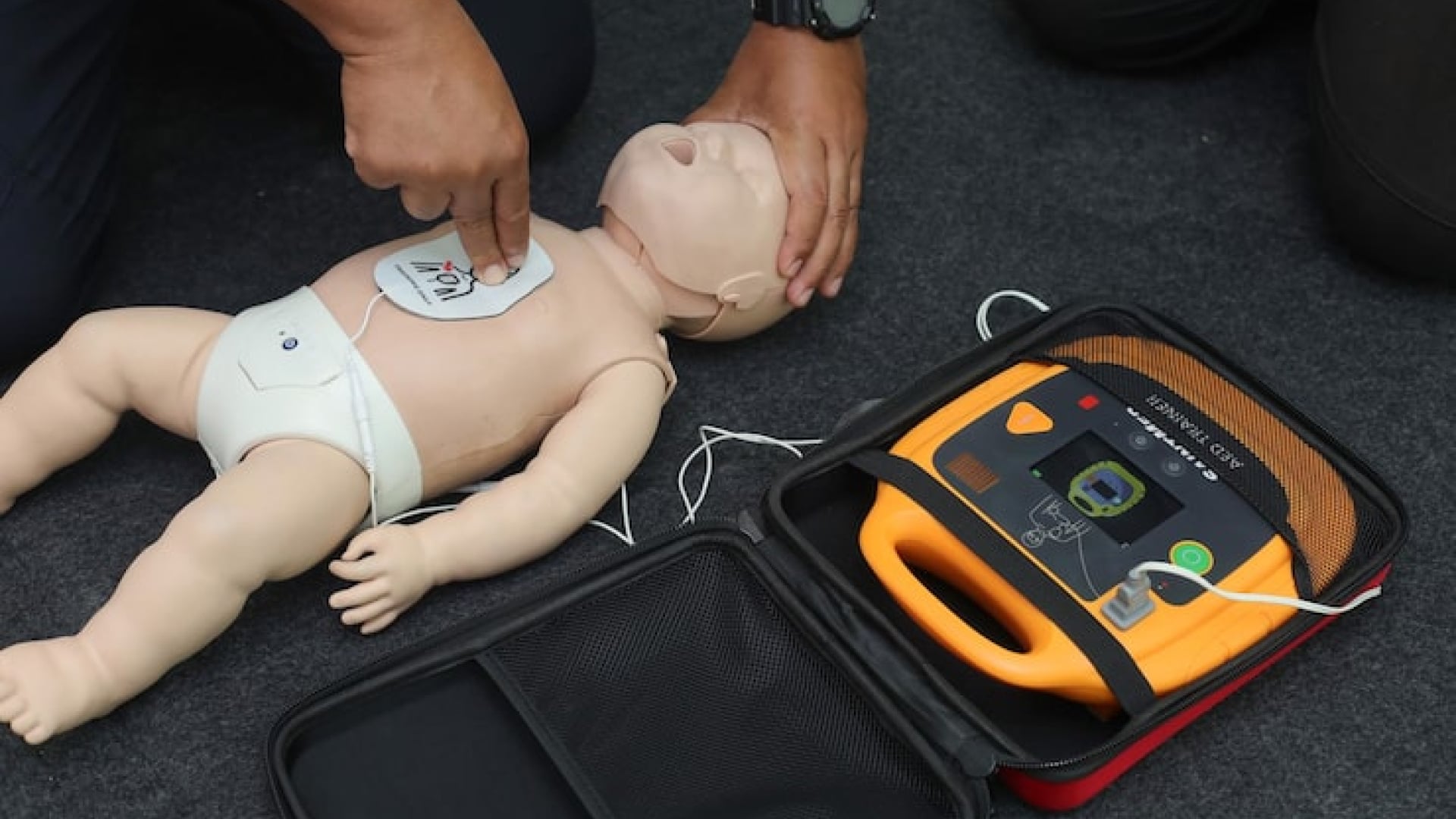
If you use adult pads on a child under eight or under 55 pounds, placement is key. This ensures safe and effective defibrillation. The pads must not touch or overlap. Start by placing one pad on the upper right chest and the other on the lower left side. If the child’s chest is too small, place one pad in the center of the chest. Put the other pad in the middle of the back. This setup lets the current pass cleanly through the heart. Check the diagrams on the pads for help. They show you how to position them correctly in urgent situations.
Important: Do not cut or change the pads.
It may seem logical to resize adult pads for a child, but they should never be cut, folded, or altered. Each pad is designed to deliver a steady shock across its entire surface. If the gel or inner parts get damaged, the shock may weaken. This can also put the child at risk of injury. Instead of changing the pads, place them at the front and back if the chest is too small for the usual position. This method keeps the pads safe and lets the current flow through the heart. Training lets you practice these steps. This way, you can respond confidently in an emergency.
Understanding the Risks of Using Adult Pads
Adult AEDs give stronger shocks than those for kids. But the bigger worry is not acting during a cardiac arrest. Top medical groups, such as the American Heart Association, emphasize that using adult pads is safer than skipping the shock. Sudden cardiac arrest is nearly always fatal without quick action. The energy level isn’t great for a small child, but the risk is low. It’s much better than leaving a heart rhythm untreated. If the AED tells you to shock, use your pads right away. Quick action gives the best chance of survival.
Get certified in CPR
CPR & AED Training
3-hour in-person training with a 2-year nationally recognized certification.
CPR, AED & First Aid Certification
Instructor-led on-site. Practice on real manikins and AED trainers.
What happens if you use child AED pads on an adult?
Pediatric AED pads are made for kids under eight years old or weighing less than 55 pounds. They are not meant for adults. The lower energy they provide isn’t enough for an adult heart. This makes them ineffective and could even be harmful in a real cardiac emergency. Using the correct pads for the patient’s size is essential for the AED to work as intended.
Most AEDs start with a shock of 150 to 200 joules. If the heart rhythm doesn’t improve, they can increase the shock to 360 joules. Many patients need several shocks. Increasing the energy level can boost survival rates during cardiac arrest.
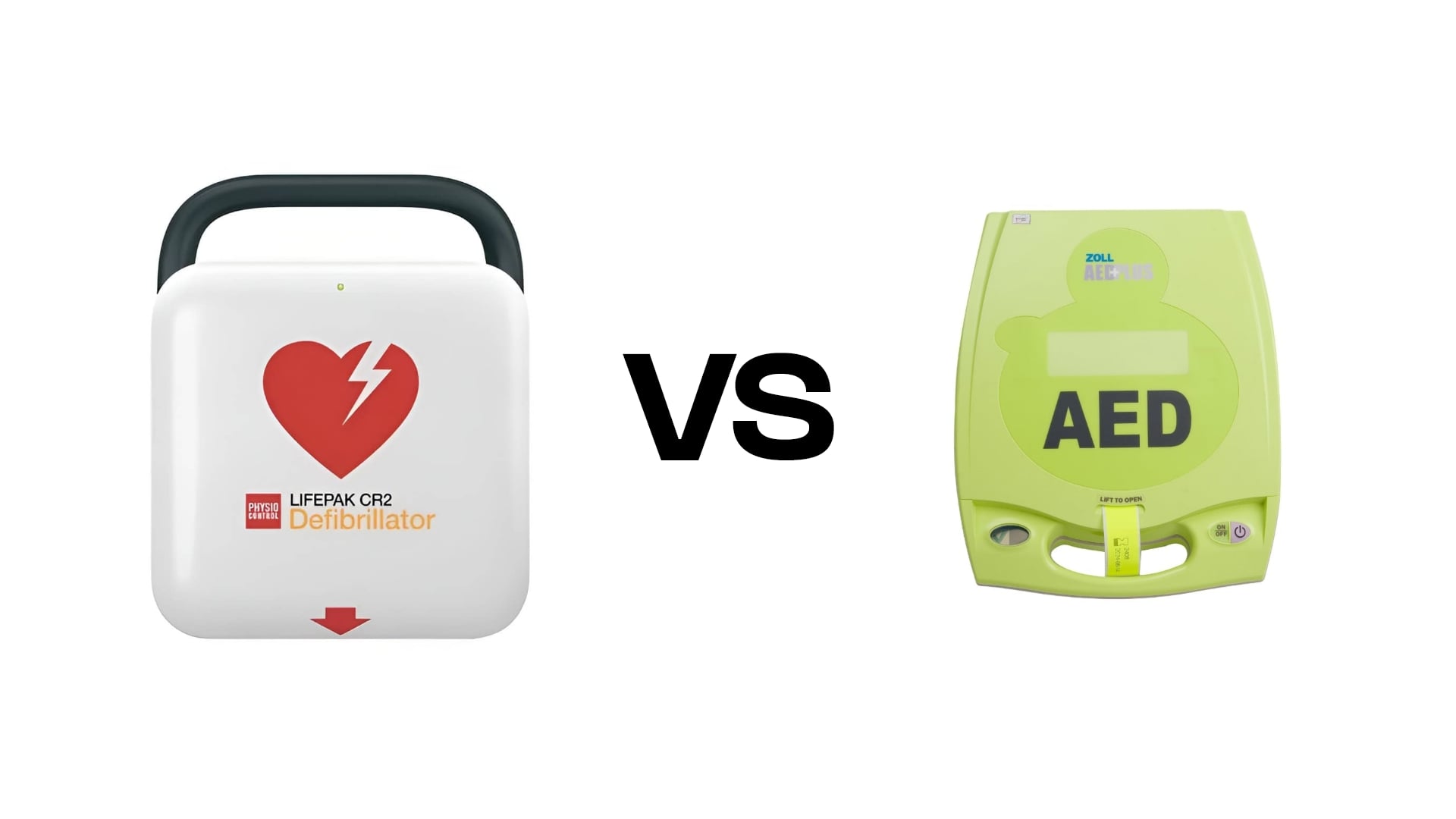
Physio-Control’s research shows that higher energy levels work best for treating sudden cardiac arrest. Many adults need shocks of up to 360 joules to get their heart rhythm stable again.
This distinction is important. Pediatric pads deliver around 50 joules. This is good for small children but way too weak for an adult heart. Using them on an older patient might not supply enough energy to fix a dangerous rhythm. This could leave the emergency unresolved or even worsen the situation.
Adult AED pads use a stronger adhesive so they can stay firmly attached, even on a hairy or sweaty chest. Pediatric pads don’t have enough grip. This makes them unsuitable for adults. They may not stick well in an emergency, which reduces their effectiveness.
Can you use adult AED pads on a child?
Pediatric pads should never be used on adults, but the reverse is acceptable in an emergency when no child-specific pads are available. Adult pads can be safely applied to a child or infant as long as they are positioned correctly, with one placed on the chest and the other on the upper back so they do not touch or overlap.
There may be times when adult AED pads must be used on a child because pediatric pads aren’t accessible, and in those moments, taking action quickly is far more important than waiting for the ideal equipment. Rapid use of an AED is essential to give the child the best chance of surviving cardiac arrest.
- No pediatric AED pads are available
- Your pediatric AED pads have expired
- If you’re using an AED like the Philips HeartStart FRx for both adults and kids, turn on child mode before use. This will set the shock level right for children.
Once the pads are positioned, allow the AED to guide you through the steps just as it would with any patient. The device checks the heart’s rhythm. It decides if a shock is needed, no matter the person’s age. Using the pads right and turning on child mode, if you can, helps younger patients perform better.
When emergency responders take over, make sure to tell them that adult pads were used. Sharing this detail helps the medical team understand the situation. Then, they can decide on the best next steps for the child’s care.
When should you switch to adult AED pads?
Pediatric AED pads are for kids under eight or under 55 pounds. If those aren’t available in an emergency, you can use adult pads instead. If you’re uncertain about a child’s age or size, adult pads are still a safe option when immediate action is needed.
Pediatric pads are not suitable for children who have entered puberty. Their energy levels change, making these pads inappropriate. Puberty typically begins at age eleven for girls and twelve for boys. If a child looks prepubescent and adult pads aren’t on hand, pediatric pads can be used instead. Visible signs like facial hair, acne, or breast development show puberty. At this stage, pediatric pads are not suitable anymore.
The Short Answer: Yes, in an emergency.
If a child has a sudden cardiac arrest and pediatric pads aren’t there, use adult AED pads immediately. In these situations, fast action matters far more than having the ideal equipment. The most important step is placing the pads correctly so they do not overlap. Place one pad on the center of the child’s chest. Put the other pad on the upper back, between the shoulder blades. This lets the shock travel safely through the heart. Quickly adjusting in an emergency is a crucial skill. It helps you respond confidently when every second matters.
What do health organizations recommend?
Major health organizations back this approach. The American Red Cross and the American Heart Association stress that using an AED with adult pads is much safer than waiting to treat. In cardiac arrest, every second matters. Waiting is far riskier than worrying about pad size. If pediatric pads aren’t available, use adult pads immediately. Follow the AED’s prompts to deliver a shock when it advises.
RECOMMENDED
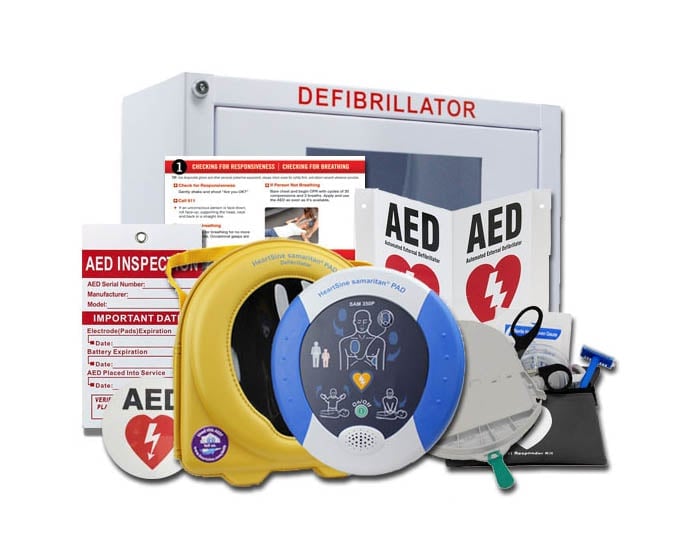
HeartSine Samaritan 350P AED Package
Compact, fully-automatic AED designed for first-time responders. Pads, battery, carry case and wall sign included.
Child vs. Adult AED pads: How to tell them apart.
If you’re not certain whether the pads are meant for children, a quick visual check usually answers. Pediatric pads have clear markings from the manufacturer. They often have unique labels or designs to set them apart from adult pads. Simply examining the pads themselves is enough to identify which type you have.
- The words “Child AED Pads” or “Pediatric AED Pads”
- An illustration of a child or an infant
- Child-specific pad placement instructions (a diagram of one pad on the front of the chest and one pad on the patient’s back)
- An illustration of a teddy bear or another child-friendly icon
- Bright, child-friendly colors like pink or baby blue.
Pediatric AED pads should remain stored in the AED case or cabinet until they’re actually needed. Only attach them to the device during an emergency when they’re required for use.
Using child pads on an adult: Is it an option?
If an adult goes into cardiac arrest and no adult AED pads are available, do not use pediatric pads or expired ones. Start CPR right away. Make sure to call emergency services for help.
Even if you haven’t been formally trained, you can still make a difference. In adult emergencies, if bystanders don’t know CPR, they should do hands-only chest compressions. Keep going until help arrives.
- Begin by rolling the victim carefully onto their back.
- Remove any clothing covering their chests.
- Stand next to the patient. Put one hand on their chest, right over the breastbone. Then place your other hand on top and lock your fingers together.
- Press straight down on the chest at a steady pace of 100 to 120 compressions per minute. Aim for a depth of about 2 to 2.4 inches, which is roughly one-third of the chest’s depth.
- Allow the chest to return to its normal position after every compression.
- Keep going until medical help takes over.
CPR keeps blood flowing to the brain and other vital organs. This continues until a defibrillator or medical help arrives.
Having an extra set of adult AED pads is a smart precaution. Emergencies can be unpredictable. Adult pads are safe for children in emergencies. Yet, pediatric pads shouldn’t be used on adults. So, having an extra adult set is important for preparedness.
FAQs
Can you use pediatric AED pads on adults?
No. Pediatric AED pads should never be used on adults. They provide a much lower energy level. This makes them ineffective and could be dangerous for an adult’s heart rhythm. If adult pads aren’t available, begin CPR and call emergency services while waiting for help.
Can an AED be used on an infant?
Yes. An AED can be used on an infant, and it is strongly recommended during cardiac arrest. If pediatric pads are available, use them. If there are no pediatric pads for the AED, adult pads may be used with correct placement to ensure they don’t touch.
What is the correct adult AED pad placement?
For adults, place one AED pad on the upper right side of the chest and the other on the lower left side. Placing the adult AED pads this way allows the electrical current to flow safely through the heart.
What should you do if there are no pediatric pads for an AED?
If no pediatric pads for the AED are available, use adult pads on the child or infant. Place one pad in the center of the chest. Put the other pad on the back, between the shoulder blades. Make sure they don’t overlap.
Can you use an AED on an infant if only adult pads are available?
Yes. You can use an AED on an infant with adult pads when pediatric pads are not available. Careful pad placement is essential to avoid the pads touching or overlapping.
What are pediatric pads used for?
Pediatric pads are made for kids under eight years old or 55 pounds. They reduce the energy of the shock to a safe level for a smaller body and should only be used on children, not adults.

Not sure which AED or training fits your needs?
An MDSI medical-oversight expert walks you through it — no obligation.
Talk to an expert →Conclusion
Using an AED quickly is vital to save lives, especially for kids or infants in cardiac arrest. Pediatric pads are the best choice, but emergencies can happen anytime. If child pads aren’t available, you can safely use adult pads. Correct pad placement is key. Follow the AED’s voice prompts. Act without hesitation. Major health groups say a quick shock, using adult or pediatric pads, boosts survival chances. Understanding how to adapt in urgent situations boosts your confidence. This helps you respond well and gives a child the best chance for recovery.