
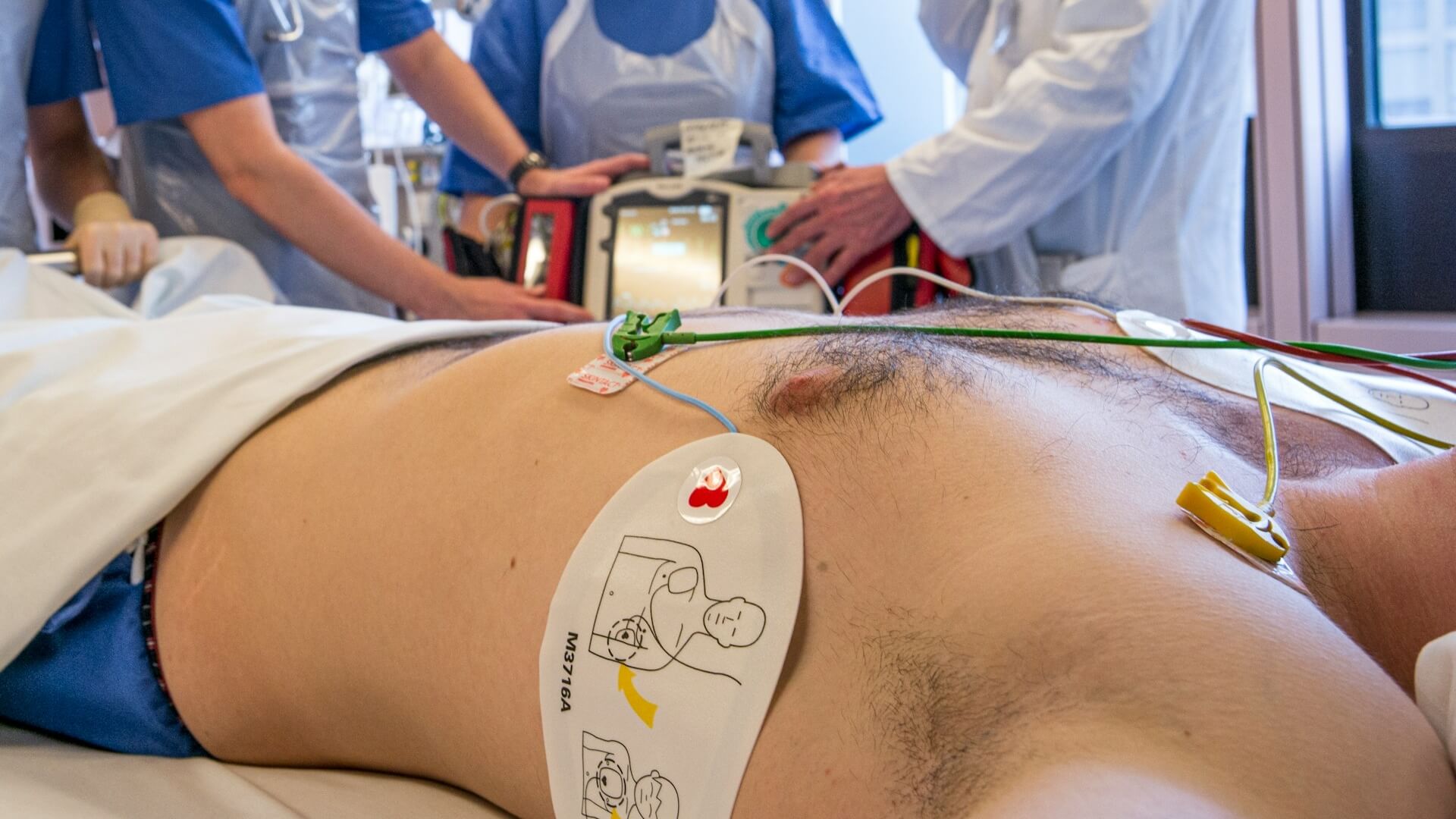
Defibrillation is vital in cardiac arrest situations. It sends an electric shock to stop irregular heartbeats. This shock helps the heart reset and regain a normal rhythm. It can boost survival chances, but it doesn’t guarantee recovery. Many people still die from cardiac arrest. Even survivors need ongoing treatment and rehab for long-term health and recovery.
What is defibrillation?
Defibrillation sends a controlled electric shock to fix a heartbeat. It works during serious arrhythmias in the heart’s lower chambers. Electrical cardioversion works best right after an abnormal rhythm starts. So, quick action is vital in emergency care.
Defibrillation can help with:
- Ventricular tachycardia (very fast heartbeat) without a pulse.
- Ventricular fibrillation is a fast and shaky heartbeat. It is the main cause of sudden cardiac arrest.
Get certified in CPR
CPR & AED Training
3-hour in-person training with a 2-year nationally recognized certification.
CPR, AED & First Aid Certification
Instructor-led on-site. Practice on real manikins and AED trainers.
Who needs to have defibrillation?
People experiencing certain dangerous heart rhythms may need immediate defibrillation. In hospitals or locations equipped with automated external defibrillators, quick help is possible. People at high risk for life-threatening arrhythmias often need to carry a defibrillator. This ensures they can get help quickly.
Personal defibrillators
Shocks from personal defibrillators can feel mild or very painful. Many say like being hit hard in the chest. People at high risk for severe arrhythmias can use these devices for quick help that saves lives.
- A wearable cardioverter defibrillator looks like a vest. You wear it under your clothes, and sensors touch your skin. These sensors watch heart activity. They can automatically deliver a shock if they detect a dangerous rhythm.
- An implantable cardioverter defibrillator (ICD) keeps an eye on the heart. It looks for dangerous rhythms and gives a shock when necessary. An ICD is different from a pacemaker. A pacemaker only keeps the heartbeat steady. In contrast, an ICD can respond to dangerous arrhythmias with powerful interventions.
Why is defibrillation used?
Defibrillation offers a critical chance of survival during sudden cardiac arrest. While waiting for a defibrillator, CPR can help maintain blood flow. Defibrillation is still safe and effective even if the person has a pacemaker or an ICD.
What is defibrillation? Why is defibrillation important?
Sudden Cardiac Arrest takes over 350,000 lives annually in the United States. This makes it one of the leading causes of death. On average, one person dies every 90 seconds.
Sudden Cardiac Arrest occurs when the heart suddenly changes to a disordered rhythm. This often includes ventricular fibrillation or pulseless ventricular tachycardia. The heart beats irregularly. It quivers, so it can’t send enough oxygen to the brain. Without quick help, not enough oxygen can cause brain damage and death in minutes.
Sudden Cardiac Arrest can strike at any moment, even when someone is in water. Using an AED in these situations needs caution. Wet conditions can be risky for both the victim and the responder. Follow your AED’s user manual. This ensures safe and effective use. If you’re not sure how to use an AED near water, keep reading. Here are the right steps to follow.
Thankfully, sudden cardiac arrest caused by abnormal heart rhythms can be treated. An electrical shock from an automated external defibrillator (AED) can restart the heart. It helps bring back a normal rhythm.
When someone suddenly collapses and becomes unresponsive, immediate CPR and defibrillation are critical. While CPR helps circulate blood by manually compressing the chest, it can’t restart the heart. Only an AED can deliver the shock needed to restore a normal heartbeat.
Defibrillation is the only effective treatment for cardiac arrest, and timing is critical. Every minute without a shock lowers the chance of survival by 7 to 10 percent. So, immediate defibrillation is crucial to save a life.
RECOMMENDED
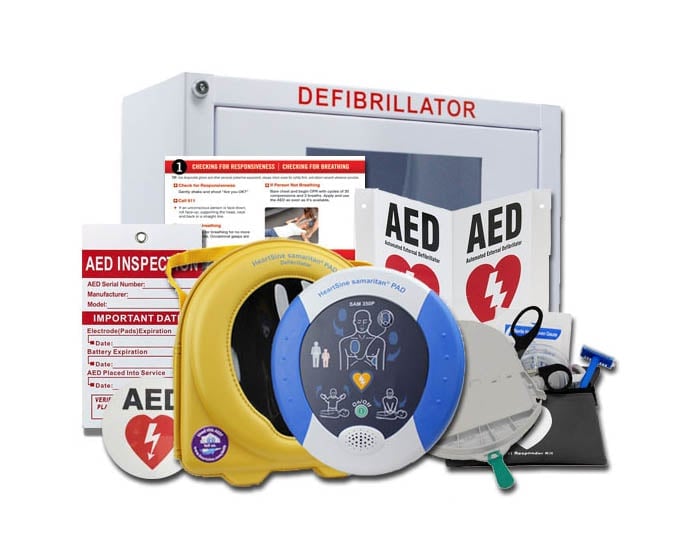
HeartSine Samaritan 350P AED Package
Compact, fully-automatic AED designed for first-time responders. Pads, battery, carry case and wall sign included.
How does defibrillation work?
A healthy heart depends on clear electrical signals. These signals help the heart contract steadily and pump blood effectively. In ventricular fibrillation or tachycardia, signals get mixed up. This confusion stops the heart from working as it should. An AED shock helps reset the heart. It allows the heart to return to a normal rhythm.
A defibrillator gives a strong electrical shock. This shock stops the heart’s irregular rhythm by briefly resetting most of the heart muscle. This momentary reset allows normal electrical activity to resume, restoring a regular heartbeat.
When a patient has cardiac arrest, an AED can help. The device gives a shock. This shock helps the heart get back to its normal rhythm and start working again.
- The heart goes from a normal rhythm to ventricular fibrillation. This change makes the patient collapse due to a lack of oxygen. They might look like they are breathing, but these are agonal respirations. They aren’t true breathing and indicate a critical emergency.
- In ventricular fibrillation or pulseless ventricular tachycardia, the patient appears lifeless. This is due to the absence of a heartbeat. Yet, biological death has not occurred. The heart still has some electrical activity and quivers with a faint motion. Yet, it isn’t enough to keep life going.
- When an AED shocks, it sends energy between the pads. This energy travels through the heart and helps to restore a normal rhythm.
- The AED sends a surge of energy to the heart cells. This makes them depolarize, which stops the chaotic rhythm. Then, the heart can reset. This process is called defibrillation.
- When defibrillation gets the heart beating normally again, blood flow starts up. This sends oxygen all over the body. The patient’s skin tone may improve, and he or she may start to breathe without help.
Why is rapid defibrillation important?
Early defibrillation is the key step in the chain of survival for sudden cardiac arrest. For ventricular fibrillation, quick shock delivery is crucial. Any delay lowers survival chances.
Cardiologists say chest compressions in CPR can protect brain function for up to ten minutes if someone has ventricular fibrillation. Still, CPR by itself can’t restart the heart. Defibrillation is essential for restoring a normal rhythm and proper heart function.
Automated External Defibrillators decrease the time to defibrillation.
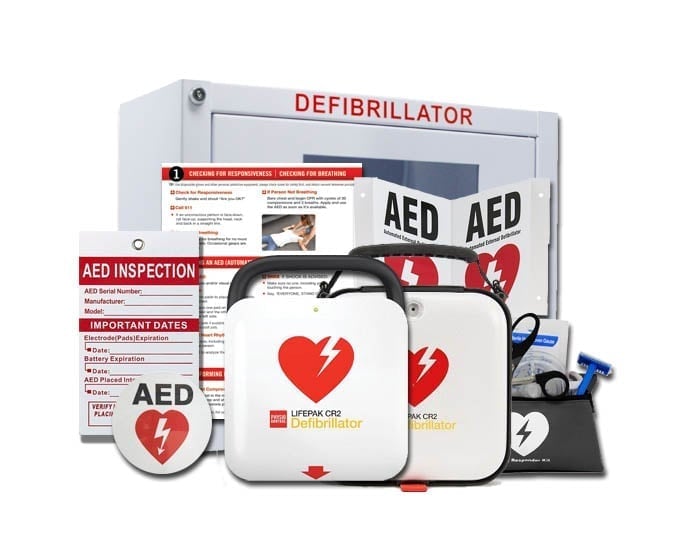
Automated External Defibrillators, or AEDs, are portable devices. They are used outside of hospitals to treat cardiac arrest. They were introduced in 1973. They analyze heart rhythms with built-in technology. If needed, they deliver a shock. AEDs are often found in public places like malls, airports, and homes. Both emergency responders and trained bystanders can use them.
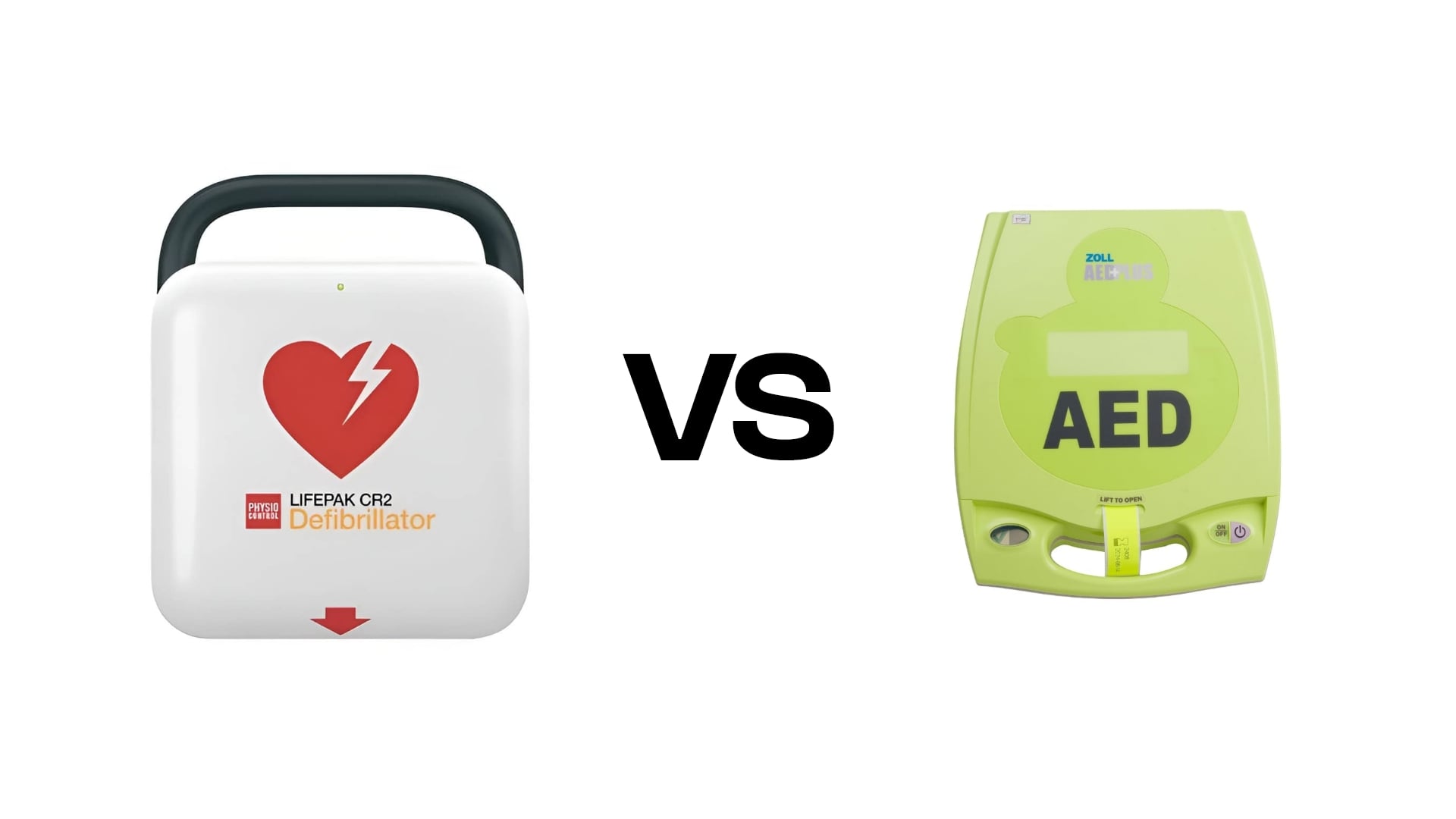
AEDs differ in function. Some are basic and deliver shocks manually. Others are advanced; they check heart rhythm and give shocks automatically when needed.
Defibrillation often depends on how fast emergency medical teams arrive with their equipment. With AEDs on hand, first responders or trained bystanders can act fast. They can deliver a shock that boosts a patient’s chance of survival.
AEDs are built for ease of use and safety, minimizing the risk of harm even if used incorrectly. Many developed countries, like the U.S., are working to increase public access to AEDs. Each year, the U.S. sells over 200,000 AEDs. In places with easy access to AEDs, defibrillation happens faster. This speed boosts survival rates for sudden cardiac arrest. In casinos with AEDs, defibrillation happened in under three minutes. In contrast, it took nearly ten minutes when waiting for paramedics.
Rapid defibrillation survival rates
Quick action is crucial in sudden cardiac arrest. AEDs are crucial, especially in places where help is slow, like remote areas or busy locations. Research consistently shows that using AEDs significantly increases the chances of survival.
Doctors stress that defibrillation must happen right after cardiac arrest. How fast this is done greatly affects survival. Each minute without a shock reduces the chance of survival by 7 to 10 percent.
Out-of-Hospital SCA
A study of 13,769 out-of-hospital cardiac arrests found a big increase in the use of AEDs. The survival rate to hospital discharge was 38% with AEDs. In contrast, CPR alone resulted in only 9%, and no resuscitation led to just 7%.
In a study of 105 patients with early ventricular fibrillation, survival was 74%. This happened when medical personnel performed defibrillation within three minutes of collapse. Yet, survival fell to 49% if the first shock occurred after three minutes.
In a study in Italy’s Piacenza region, 1,285 untrained volunteers used 39 AEDs. They responded to sudden cardiac arrest cases with EMS over 22 months. They handled 143 incidents, arriving on average in 4.8 minutes—faster than EMS, which averaged 6.2 minutes. Patients helped by these volunteers had a hospital discharge survival rate of 10.5%. In contrast, the rate for those with EMS alone was only 3.3%.
Research from different places shows that early defibrillation greatly raises survival rates. It works much better than the standard EMS response. In regional centers of the Resuscitation Outcomes Consortium, survival rates improved. They went from 43% with EMS defibrillation to 67% when bystanders used an AED. In police-led responses, the average arrival time was 4.88 minutes. This led to a 17.2% survival rate. In contrast, EMS took 7.64 minutes, resulting in a 9% survival rate. In casinos, survival rates were 74% if defibrillation happened within three minutes. But if it was delayed, the rate dropped to 49%. In Italy, bystanders with AEDs acted quicker than EMS. This more than tripled the survival rate to hospital discharge—10.5% compared to 3.3%. These results highlight the life-saving impact of rapid AED access and early action.
Research shows that AEDs are crucial for treating sudden cardiac arrest. Firsthand accounts also highlight their importance. AEDs are proven to be safe, affordable, and effective. They can greatly improve survival rates, especially when emergency response times are slow.
FAQs
Why is rapid defibrillation so important in sudden cardiac arrest?
Rapid defibrillation is key. Every minute without it cuts survival chances by 7–10%. Devices like the Cardiac Science AED give a quick shock. This stops the chaotic rhythm and helps restore a normal heartbeat. The faster this shock is delivered, the greater the chance of survival.
What makes early defibrillation more effective than waiting for EMS?
Early defibrillation boosts survival rates. This is especially true when bystanders use AEDs. It’s better than waiting for emergency services. In some studies, survival tripled when bystanders acted quickly. This shows how important early help can be.
How many people die every minute from sudden cardiac arrest?
In the United States, more than 350,000 people die from sudden cardiac arrest every year. That’s about one death every 90 seconds. This urgent rate shows we need better access to AEDs. We also need faster defibrillation training.
Can you use an AED at home, and is there a risk of electric shock if you are home alone?
Yes, AEDs like those from Cardiac Science are safe and designed for home use. Some AED models give voice instructions when you’re home alone. This helps reduce the risk of misuse. They only deliver a shock when necessary. This reduces the risk of accidental electric shock.
What are agonal beats, and how are they different from normal breathing?
Agonal breaths are irregular, gasping breaths. They can happen after cardiac arrest. They are not effective breathing and can be mistaken for signs of life. Recognizing agonal respirations is vital to avoid delaying CPR or early defibrillation.
Not sure which AED or training fits your needs?
An MDSI medical-oversight expert walks you through it — no obligation.
Talk to an expert →Conclusion
Quick access to a defibrillator can be crucial for surviving sudden cardiac arrest. Using devices like the Cardiac Science AED can save lives. They improve survival rates by providing early defibrillation. This is especially true when it is given in the first few crucial minutes. Every year, more than 350,000 people die from cardiac arrest—about one every 90 seconds. So, it’s crucial to make AEDs widely available and boost public awareness. Quick action can save lives. This is true at home, in public, or during emergencies like agonal breaths or electric shocks. Using this life-saving technology is key for a safer, more prepared community.