

- Published
What Is an AED and How Does It Work? A Beginner’s Guide to Defibrillators
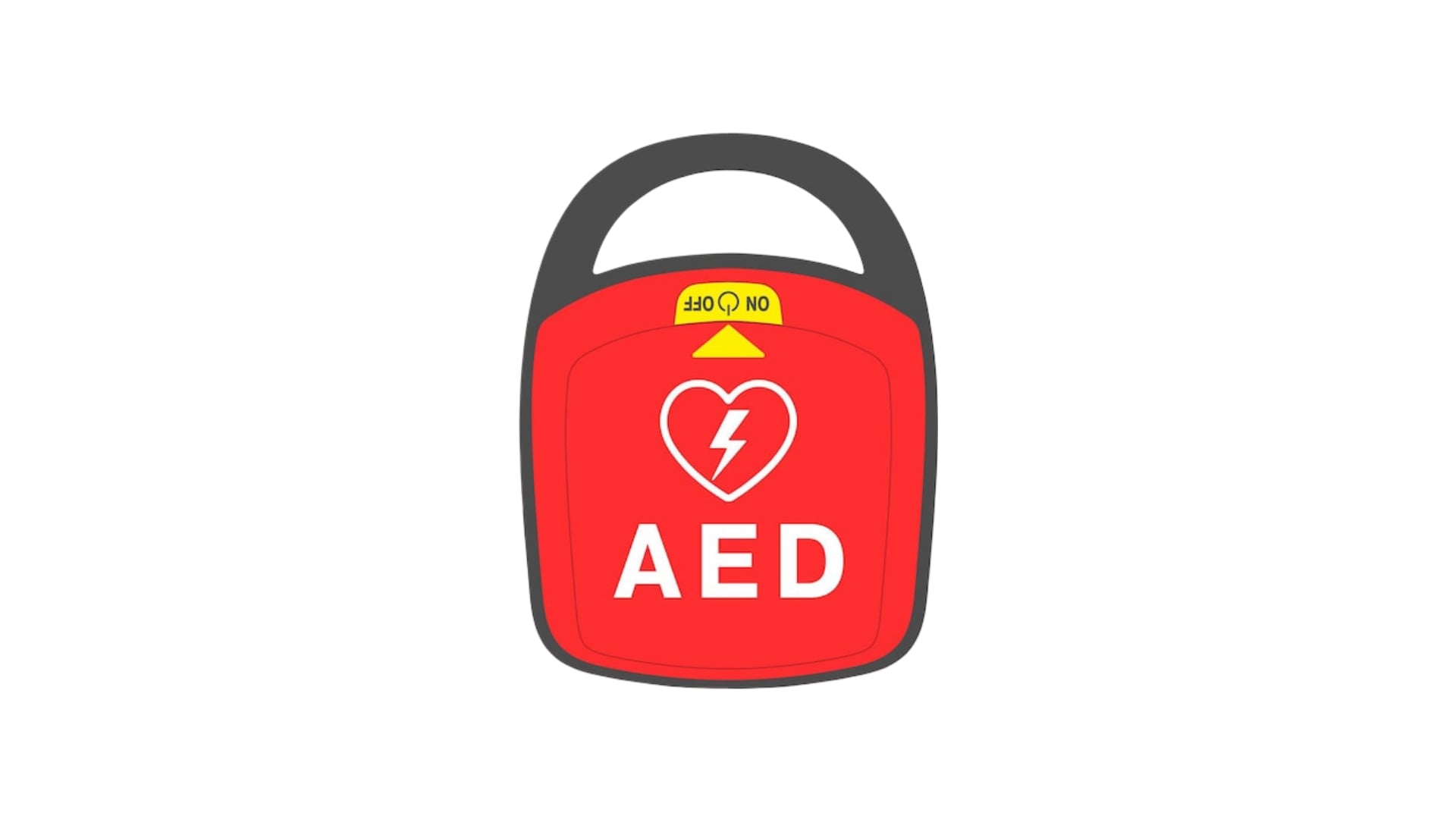
Curious about Automated External Defibrillators (AEDs)? This quick guide gives clear answers to common questions about AEDs. It explains how they work and why they are vital for saving lives in sudden cardiac emergencies.
Let’s clarify what an AED is and clear up some common misconceptions about what it isn’t.
AED Medical Abbreviation: Automated External Defibrillator
Many people mistakenly call AEDs “automatic.” The correct term is “automated external defibrillators.” This mix-up can be found in some official laws and documents. Misspellings and typos about AEDs are common. They often cause more confusion about the term.
- defibUlator
- defiBRAlater or defiBRAlator
- Defibillator or defibilator
- And, of course, the famously redundant “AED defibrillator” (aka the automated external defibrillator defibrillator)
What is an AED?
An Automated External Defibrillator, or AED, is a device for sudden cardiac arrest. It sends an electric shock to help the heart beat normally again. It is designed for quick use by anyone, even with little training. Each model has clear instructions to help users follow the process.
How does an AED work?
AEDs use simple parts to analyze and respond during cardiac emergencies. They rely on advanced technology to provide lifesaving treatment.
- Electrode pads: Electrode pads are adhesive patches placed on the chest to track the heart’s rhythm. If the AED determines that a shock is needed, it sends an electric current through the pads. This current flows through the heart to help restore its rhythm.
- Battery: The battery powers the AED, enabling it to charge and deliver a shock when needed. It also allows for regular self-checks and diagnostics. This keeps the device ready for use.
- Capacitor: The capacitor in an AED stores the energy needed to deliver a powerful, single shock. It must store a large charge to work well in a cardiac emergency, unlike standard capacitors.
- Processor: The processor acts as the AED’s control center, analyzing the heart’s rhythm to decide if a shock is needed.
AEDs can spot two dangerous heart rhythms: ventricular fibrillation and pulseless ventricular tachycardia. When it detects either, the device gives a precise shock. This helps restore normal function. AEDs are different from hospital defibrillators. They are fully automated, so users don’t need to read heart rhythms. The device analyzes rhythms on its own. This makes it easy for non-medical staff to use in emergencies.
AEDs are now found in many public places. They can be used immediately during a cardiac emergency. This helps provide vital treatment before emergency responders arrive.
An AED helps ordinary people save lives in sudden cardiac emergencies.
How to use an AED?
There are several FDA-approved AED models. They are easy to use and offer voice prompts that guide users step by step. These devices are for people with little or no training. The FDA requires testing to make sure they are easy to use in emergencies.
For exact guidance, it is important to refer to your device’s user manual.
STEP 1 – CALL: Recognize Cardiac Arrest and Call 911
- Scene Safety: Perform a quick survey of the scene to make sure that it’s safe for you to help.
- Check for responsiveness: If the victim is not responsive and not breathing normally, they might be in cardiac arrest.
- Call 911
STEP 2 – PUSH: Perform CPR
- Start CPR: Push hard and fast on the center of the chest while calling 911 and asking another person to get the AED.
STEP 3 – SHOCK: Steps for Using an AED
- Turn it on: Listen to the voice prompts.
- Expose the patient’s chest: To apply the AED pads correctly, first, remove any clothing covering the person’s chest. Make sure it is completely dry. This helps the electrodes stick and work well.
- Apply the AED electrodes on the patient’s bare chest: Use the AED’s voice prompts and pad illustrations to guide placement. One pad is usually placed under the right collarbone. The other pad goes on the lower left side, near the armpit.
- Analyzing: Once the pads are in place, the AED prompts the user and starts analyzing the heart’s rhythm.
- Delivering a shock (if needed): When an AED detects a shockable rhythm, how the shock is delivered depends on the type of device. A fully automatic AED will charge automatically. It will then warn everyone to stay clear before delivering the shock on its own. A semi-automatic model will prompt the user to press a marked shock button once it’s ready. It’s important not to confuse this with the power button during the urgency of the situation.
- Perform CPR & Re-analyze. AEDs follow the American Heart Association’s guidelines. They recommend CPR for two minutes between rhythm checks. Always listen to and follow the AED’s prompts during use.
- Keep following the AED’s prompts until emergency medical services arrive and take charge.
When should I use an AED?
Check your AED manual for specific instructions. Generally, these devices are for people who are unresponsive and not breathing normally.
It can be hard for people without training to know if someone is breathing normally.
AEDs have smart tech that checks heart rhythms after the pads are placed. They only deliver shocks when they detect a shockable rhythm. So, they are safe for people with little training.
When NOT to use an AED?
AEDs are easy to use. Studies show even untrained kids can use them. Yet, you should not take them lightly. Do not use AEDs on someone who is conscious or responsive. They are only meant for unresponsive people in cardiac arrest.
Can an AED be used on an infant?
Cardiac arrest can happen to children and infants. Each year in the U.S., it sadly takes the lives of 7,000 to 10,000 kids.
When using an AED on a child, first check if it needs special pediatric pads. Some AEDs have a built-in attenuator. This feature lowers the shock for kids under 8 or weighing less than 50 pounds.
- If your AED has pediatric pads or a pediatric key, buy and store them with the device. In an emergency, apply the child pads, turn on the AED, and follow the voice instructions as you would for an adult.
- To treat a child, press the pediatric mode button or insert the pediatric key on your AED. If it uses the same pads for all ages, this will switch the settings.
What are the types of AEDs?
AEDs come in various types. These types refer to the different defibrillators available. They are not the same as brand names.
Manual Defibrillators
Manual defibrillators, used in hospitals and ambulances, let medical staff view the ECG. They can choose when and how to deliver a shock instead of just following automated prompts.
Manual defibrillators, or monitors, often come with advanced features. They can include blood pressure cuffs, oxygen saturation sensors, and 12-lead EKG monitoring. They can pace and cardiovert, unlike AEDs. This makes them suitable for professional use in patient care and monitoring.
These defibrillators are significantly larger and heavier than AEDs, which limits their portability. These are complex tools. They are meant for trained professionals, not the general public. Several well-known brands produce manual defibrillators:
- Philips MRx
- Philips RDT Tempus
- Philips XL & XL+
- Physio Control LIFEPAK 15
- Physio Control LIFEPAK 20
- ZOLL E Series Defibrillator
- ZOLL M Series Defibrillator
- ZOLL R Series Track/Defibrillator
- ZOLL X Series Track/Defibrillator for EMS
- ZOLL X Series Track/Defibrillator for Hospital Transport
Automated External Defibrillators (AED)
Unlike professional defibrillators, AEDs are designed for everyday users. They are designed for simplicity. This smart technology helps bystanders act quickly in emergencies. It detects when a shock is needed.
AEDs come in two main types: semi-automatic and fully automatic. They cost less than professional or manual defibrillators. This makes them easier for the public to use. Avive and several other brands are commonly recognized in the AED market.
- Cardiac Science
- Defibtech
- HeartSine
- Philips
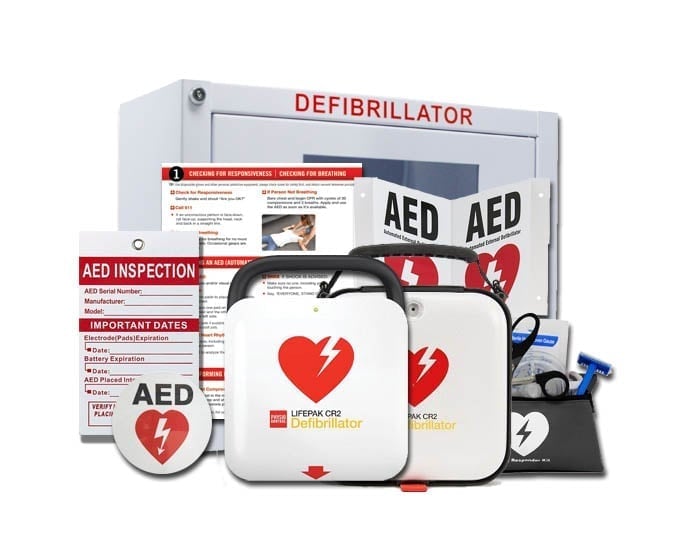
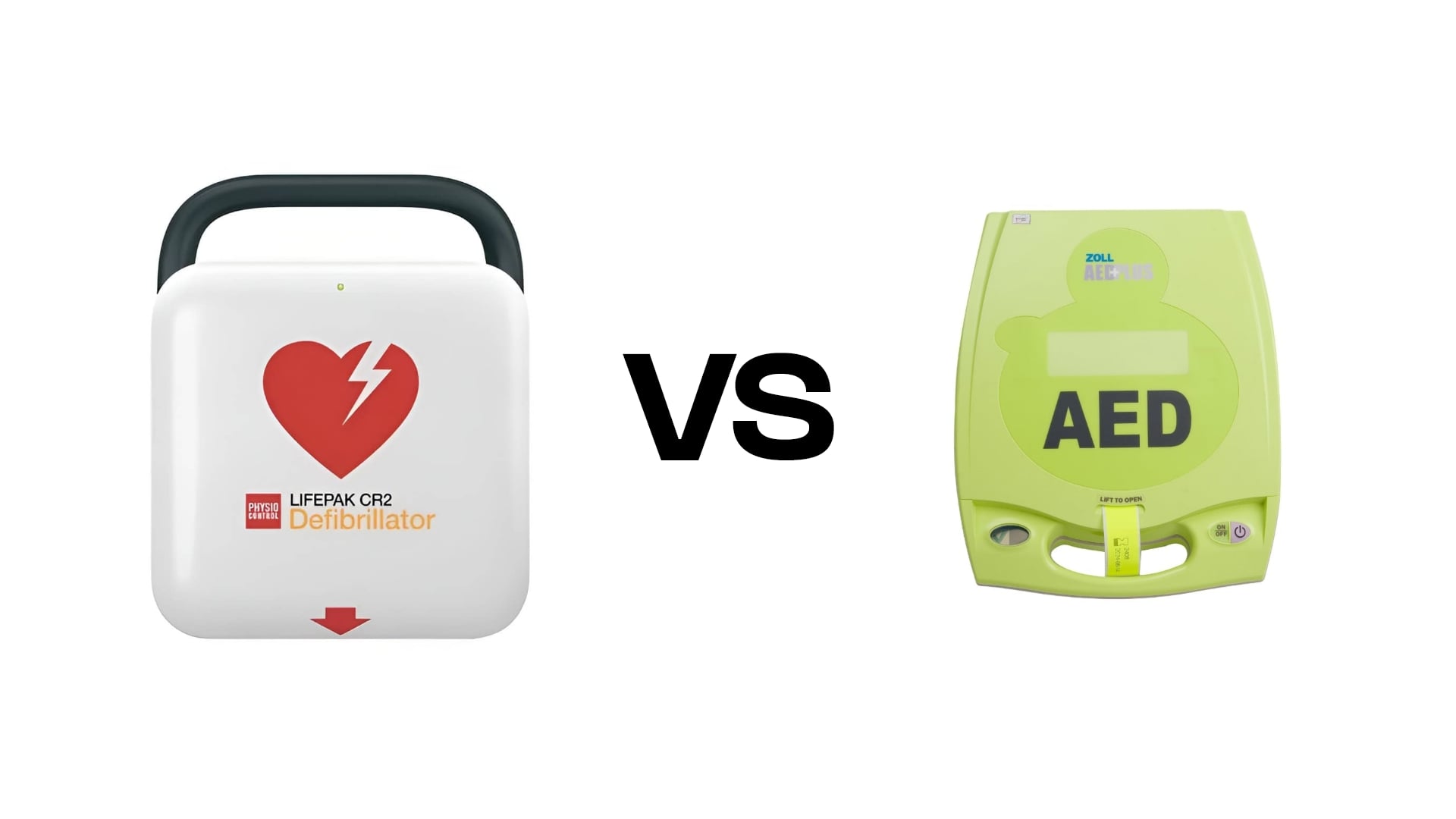
- Physio Control (formerly Medtronic and now owned by Stryker)
- ZOLL
FAQs
What does the AED acronym stand for?
The AED acronym stands for Automated External Defibrillator. It’s a portable medical device. It analyzes heart rhythms and gives an electric shock if needed. This helps restore a normal rhythm during sudden cardiac arrest.
How do you shock someone with an AED?
To shock someone with an AED, first place the electrode pads on their bare chest. Then, let the device check their heart rhythm. Finally, follow the prompts it gives. A semi-automatic AED will ask you to press a shock button, while a fully automatic AED delivers the shock on its own. Always ensure that no one is touching the patient before the shock is delivered.
Why is the AED battery important?
In an AED, the battery is a critical component that stores and supplies power to the device. It charges the capacitor so the AED can deliver a shock. It also supports regular self-checks to keep the unit ready for emergencies.
What happens to used AED pads after a rescue?
Throw away used pads after a rescue. They are single-use and might not stick well anymore. It’s important to replace them promptly to keep the AED ready for the next emergency.
Which adult victim requires high-quality CPR?
Any adult who is unresponsive and not breathing normally needs high-quality CPR. Chest compressions right away and using an AED, if you have one, can boost survival chances.
What is an AED trainer, and how is it used?
An AED trainer is a practice version of a defibrillator. It does not deliver shocks and is used for CPR training. It simulates real-life situations. Users can learn to apply pads, follow prompts, and deliver shocks safely.
Conclusion
In conclusion, knowing how an AED works and when to use it can save lives in a cardiac emergency. These devices are made to be easy, safe, and effective, even for beginners. Being prepared helps you act confidently. Understand the AED acronym. Learn how to safely shock someone. Also, know why you need to replace used pads and batteries. With the right knowledge and tools, anyone can help save a life.
Disclaimer for information purposes only:
The information provided on this website is intended for general educational and informational purposes only. It is not medical advice and should not be used as a substitute for professional diagnosis, treatment, or care. Always consult a qualified healthcare or medical professional regarding any health-related questions or concerns.
While we strive to ensure the information shared is accurate and up to date, no guarantees are made regarding completeness, accuracy, or applicability to any individual situation. Use of this content is at the reader’s sole discretion and risk.
This website is part of the Response Ready family of emergency preparedness and training resources, including CPR & first aid training and compliance services, AED sales and program support, AED program management software, and medical oversight solutions provided through our affiliated platforms:
• CPR1.com
• AEDLeader.com
• AEDTotalSolution.com
• ResponseReady.com
By accessing or using this website, you agree to release, indemnify, and hold harmless the website owners, authors, contributors, and affiliated entities from any claims, losses, damages, or liabilities arising from the use or reliance on the information presented.

Dr. Ann Jarris MD, MBA, FACEP
Save Lives with the Right AED Today
Buy Trusted AEDs Today!
Get Certified in CPR and Make a Difference!
Save Lives with the Right AED Today

- Published