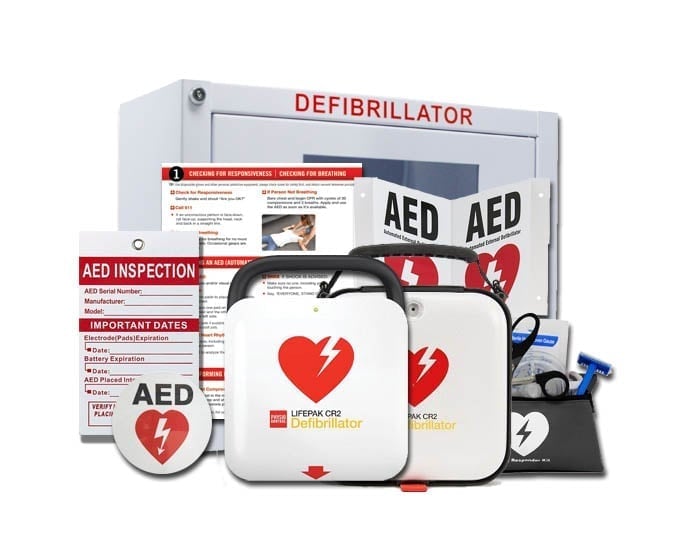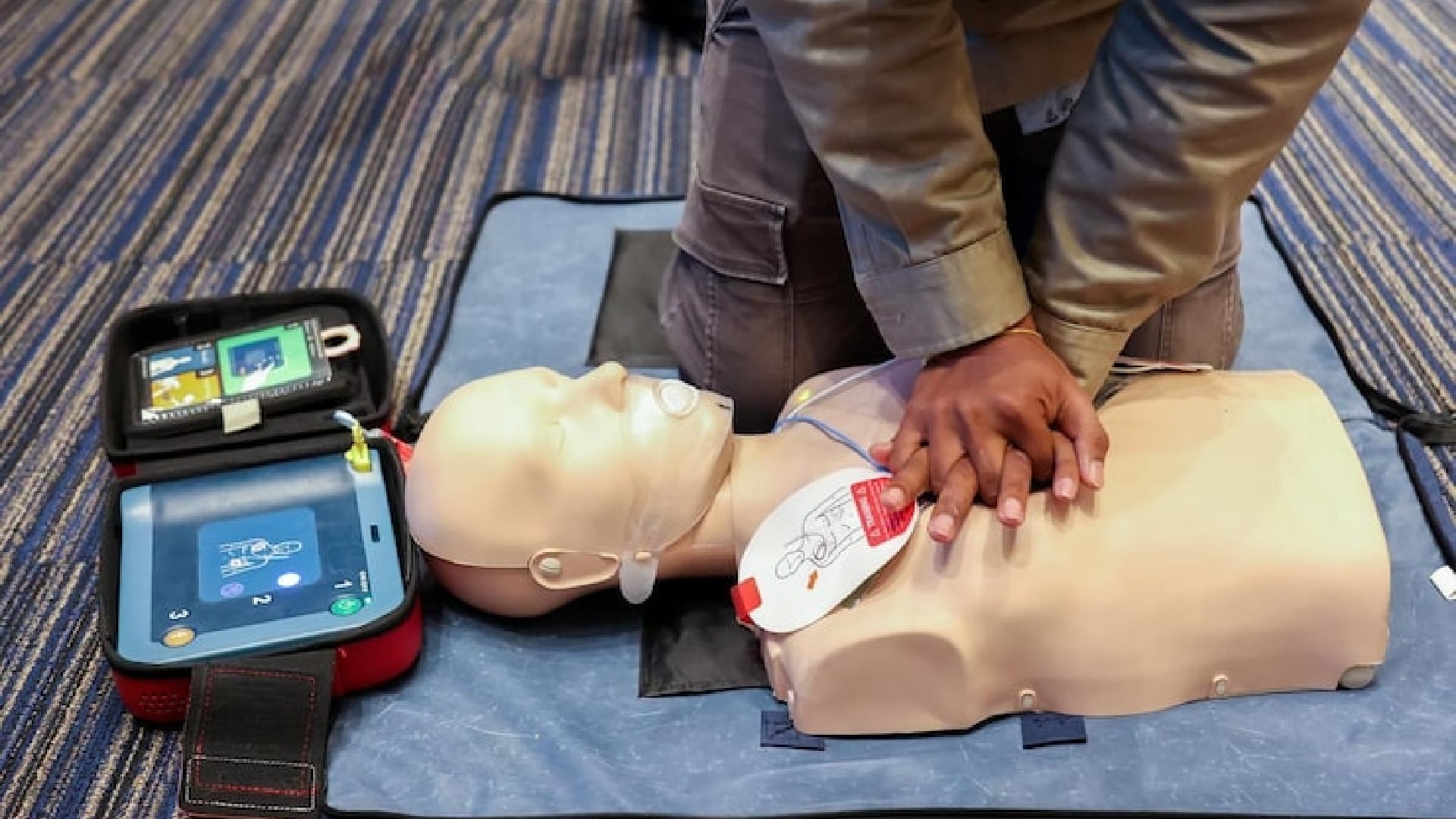

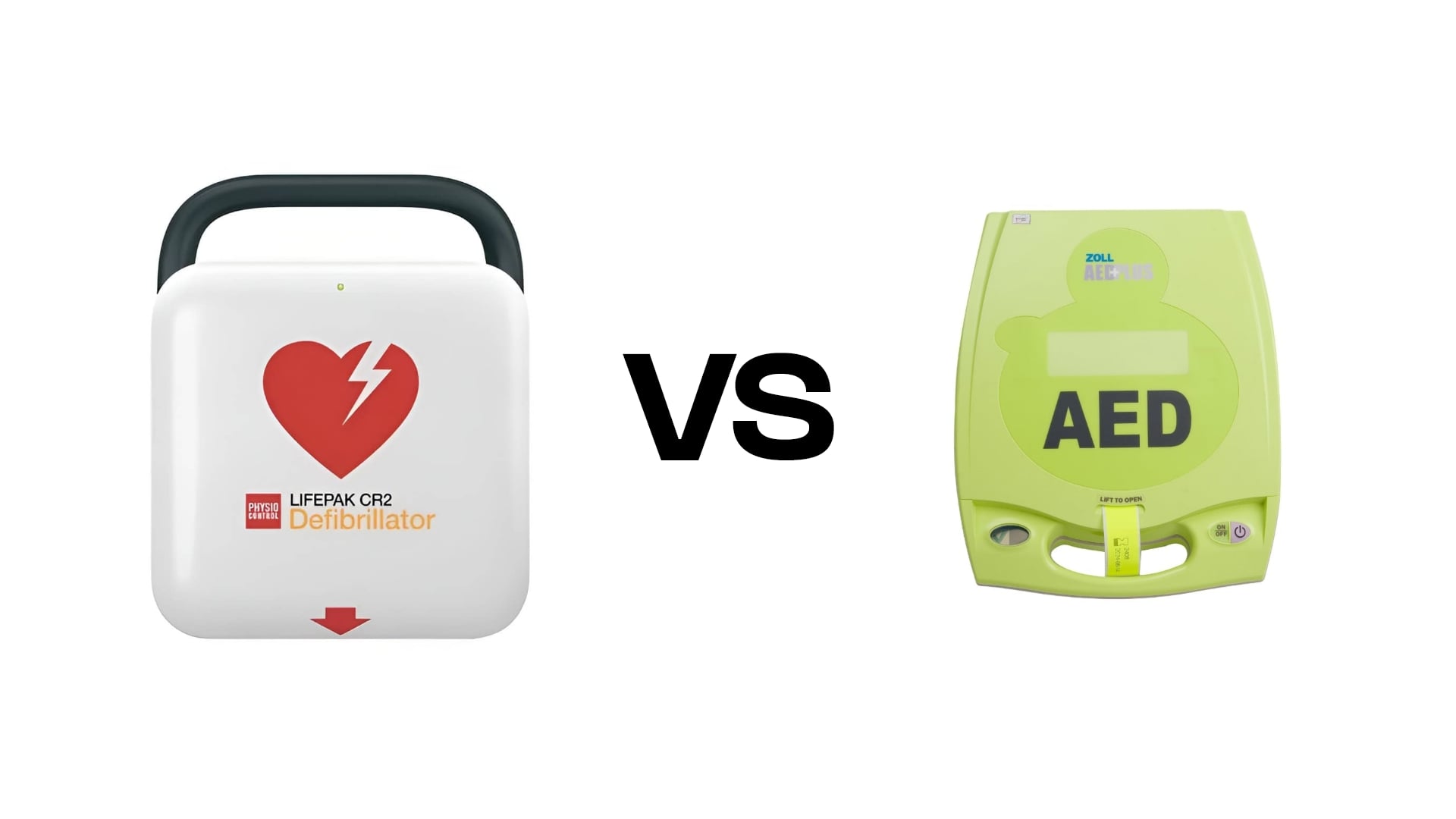
Automated external defibrillators (AEDs) are crucial for sudden cardiac arrest. Quick action with an AED can greatly boost chances of survival. Trusted devices in emergency medical settings include those from Physio-Control LIFEPAK and ZOLL. EMS professionals widely use both brands. This overview compares two respected product families. It highlights their roles in emergency care. This helps readers understand the differences and find the right solution.
Zoll vs LIFEPAK Comparison Chart
ZOLL and LIFEPAK AEDs have key differences that can affect buying choices. These include long-term support and user guidance. LIFEPAK models usually have a longer warranty. ZOLL devices stand out. They give spoken instructions and show visual LED prompts. In contrast, LIFEPAK uses voice-only guidance. These distinctions can be important depending on how and where the AED will be used.
| Physio-Control Lifepak CR2 | Physio-Control Lifepak CR2 USB | ZOLL AED Pro | ZOLL AED Plus | ZOLL AED 3 | |
| Weight | 4.5lbs (2.0kg) | 4.5lbs (2.0kg) | 6.5lbs (3.1kg) | 6.7lbs (3.1kg) | 5.5lbs (2.5kg) |
| Prompt Type | Voice | Voice | Voice + LED | Voice + LED | Voice + LED |
| Operating Mode | Semi-automatic or fully-automatic | Semi-automatic or fully-automatic | Semi-auto, semi-auto + manual, manual | Semi-automatic or fully-automatic | Semi-automatic or fully-automatic |
| Warranty | 8 years | 8 years | 7 years | 7 years | 7 years |
| ECG Display | No | No | YES | No | No |
| Child Options | Child mode | Child mode | Child pads (sold separately) | Child pads (sold separately) | Child mode |
| Languages | English Spanish | Optional bilingual mode | English | English | English |
| Wi-Fi | YES | No | No | No | YES |
| IP Rating | IP55 | IP55 | IP55 | IP55 | IP55 |
| Price | From $1,895 | From $1,795 | From $2,895 | From $1,699 | From $1,895 |
Get certified in CPR
CPR & AED Training
3-hour in-person training with a 2-year nationally recognized certification.
CPR, AED & First Aid Certification
Instructor-led on-site. Practice on real manikins and AED trainers.
Introduction to Physio-Control LIFEPAK
Physio-Control was founded in 1955 by Dr. Karl William Edmark. It was an early innovator in CPR and defibrillation technology. In 2016, it became part of Stryker Corporation. Today, EMTs prefer LIFEPAK defibrillators. Their intuitive design and ease of use make them ideal for cardiac emergencies.
Features of the LIFEPAK CR2 Series Defibrillators
- Metronome for chest compressions
- Child mode
- Bilingual capabilities
- Wi-Fi and USB options for sending event data to the attending hospital
- Rugged construction (IP rating of 55 for protection against dust and water)
- ClearVoice (TM) technology adjusts the volume automatically to account for background noise
- cprINSIGHT (TM) analysis allows chest compressions to continue while the device analyzes the patient’s heart rhythm
Pros
The LIFEPAK CR2 defibrillator is made for easy use by everyone. It has a special child mode and supports two languages. Plus, you don’t need extra pediatric accessories. This all-in-one approach is great for public places. It works well in schools, athletic facilities, and community spaces. Responders can easily assist both adults and children.
These devices support many languages. This makes them ideal for workplaces and institutions with diverse groups. Responders can follow clear instructions, no matter the language.
Cons
LIFEPAK AEDs usually cost more than some other options. This is due to the advanced features in each unit. This investment supports professional-grade technology trusted by medical responders in critical care situations.
Some LIFEPAK defibrillators might need a battery change after use. So, regular inspections are very important. For the LIFEPAK 1000, check the battery status manually. Keep a fully charged backup. This way, the device will be ready in an emergency.
LIFEPAK User Reviews…
A user praised the simple and intuitive design of the LIFEPAK CR2. They noted how easy it is to understand and use the device.
A seasoned NYC emergency medic prefers LIFEPAK over other brands. They highlight its easy use and strong design as major benefits, especially in tough conditions.
Introduction to ZOLL
ZOLL, founded in 1980 by cardiologist Paul Zoll, specializes in innovative cardiac therapy. Paul Zoll was a pioneer in this field. The company has a strong reputation built over decades of clinical advancements. The legacy lives on in today’s defibrillators. They show the company’s ongoing commitment to lifesaving technology.
Features
- LED display with high image quality
- Timer for chest compressions
- Real-time cardiopulmonary resuscitation feedback
- Rugged construction (IP rating 155 against dust and water)
- Child mode or child electrodes (depending on the model)
The ZOLL 3 does more than its main job. It offers ECG monitoring and a child mode. This helps support more patients. It also lets event data be sent wirelessly to medical facilities. This helps streamline post-incident review and care coordination.
Pros
Many professionals highlight ZOLL AEDs for their impressive battery life. They see this as one of the brand’s top strengths.
ZOLL’s CPR feedback system is known for its easy design. It gives real-time guidance that changes based on compression speed and depth. This helps users perform CPR effectively.
ZOLL has a wide variety of AEDs. They cater to all experience levels. Some are simple for the public, while others are advanced for clinical settings. This flexibility makes it easier to find a device that fits both the user’s skills and the setting.
Cons
ZOLL’s CPR-D pads are advanced but might seem confusing to users without training. This can cause hesitation in an emergency.
The ZOLL AED Plus has an audible metronome to help with compression timing. Yet, some responders may find the pacing cues confusing.
Its larger size and extra weight might limit how well it fits in compact cabinets. This also makes the device harder to move quickly in an emergency.
ZOLL User Reviews…
A reviewer was very satisfied with the ZOLL Plus. They said it was a device they would happily recommend.
One customer gave the ZOLL Plus a top rating, praising it as an excellent AED based on his or her experience.
A ZOLL Plus user said it has much more functionality than older models. They really like the automatic shock feature and the added CPR support.
An EMT reviewer found the ZOLL 300 series easy to use. They also praised its long-lasting battery, noting it performed well in real-world situations.
A Michigan paramedic mentioned that the ZOLL unit is much lighter than the LIFEPAK 15. This reduced weight is a big advantage in the field.
RECOMMENDED
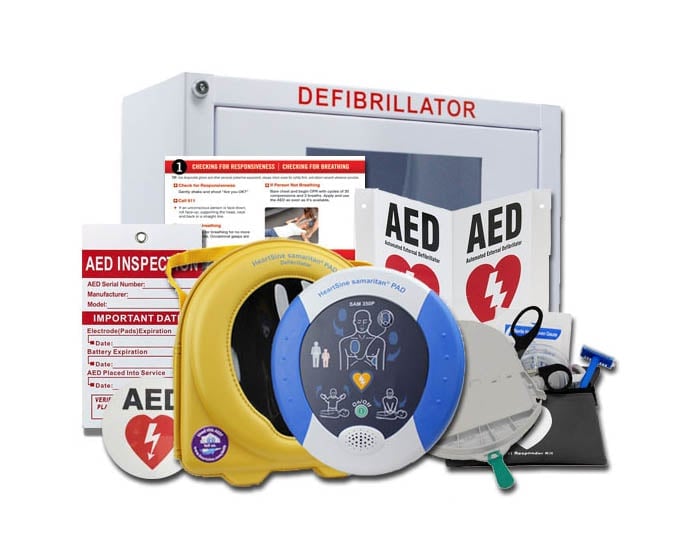
HeartSine Samaritan 350P AED Package
Compact, fully-automatic AED designed for first-time responders. Pads, battery, carry case and wall sign included.
Still Deciding Between ZOLL vs. LIFEPAK for External Defibrillation?
Both LIFEPAK and ZOLL AEDs are suitable for trained pros and the public. Yet, some places benefit more from one type than the other. In schools and community centers, LIFEPAK devices are known for being easy to use.
ZOLL defibrillators are great for remote or mobile settings. They are great for industrial sites or rural response vehicles. These areas often have limited access for long periods. Medical professionals like the strong CPR feedback and optional voice prompts. These features give them better control during resuscitation.
The best choice depends on your priorities and situation. Both options provide reliable performance and trustworthiness.
FAQs
What is the difference between a Zoll track and a Lifepak 15?
A Zoll track and the Lifepak 15 both meet advanced cardiac care needs. Yet, they differ in design and user experience. The Lifepak 15 has a tough design and an easy-to-use interface. This makes it popular with EMS teams. Zoll monitors are popular because they offer real-time CPR feedback. They are also lighter, which makes them easier to carry.
Is Lifepak or Zoll better for professional EMS use?
Both brands are trusted in professional settings. Yet, the choice usually depends on personal preference and the environment. Lifepak units, like the Lifepak 15, are popular with paramedics. Zoll defibrillators are often chosen for their CPR support and long-lasting batteries.
What does “Zoll defibrillator” mean, and who uses it?
Zoll defibrillator is Finnish for Zoll defibrillators. It includes all Zoll AEDs and monitoring devices. These units are used worldwide in clinical and public settings. They are known for their durability, guided CPR technology, and flexible designs.
Is the Lifepak line easy for non-professionals to use?
Lifepak devices, often called Lifepak, have clear voice prompts. They include features that help both trained responders and everyday users. Models intended for public use focus on simplicity while retaining medical-grade technology.
What is considered the best portable AED today?
The best portable AED depends on how and where it will be used. Zoll models are popular for their mobility and long battery life. Lifepak options are popular because they are easy to use. They also have a strong presence in emergency medical services. Both are considered top-tier portable AED solutions.
Not sure which AED or training fits your needs?
An MDSI medical-oversight expert walks you through it — no obligation.
Talk to an expert →Conclusion
In conclusion, both LIFEPAK and ZOLL defibrillators are top choices. They are trusted by emergency professionals and public-access programs. Each brand has its own strengths. LIFEPAK is great for accessibility, ease of use, and broad EMS adoption. ZOLL is known for durability, advanced CPR feedback, and reliability in tough environments. The best choice depends on the setting, user experience, and priorities. Either choice offers reliable, lifesaving technology that works when it counts.