
Cardioversion and defibrillation are procedures that fix abnormal heart rhythms called arrhythmias. Some arrhythmias are harmless and can happen in healthy people. But others can be serious and affect how well the heart pumps blood. Sometimes, these dangerous rhythms can lead to sudden cardiac arrest. Quick action is key for survival.
Cardioversion treats people with uneven heart rhythms who still have a pulse. It sends a timed electrical shock that matches the heart’s rhythm. This helps restore a normal beat while keeping the heart’s natural cycle intact. While it is effective for specific arrhythmias, other types may need defibrillation instead.
Cardioversion
Cardioversion is a medical method that uses a low-energy shock. Doctors time this shock to the exact moment needed to fix abnormal heart rhythms. It is often used for rapid atrial fibrillation or atrial flutter. The shock matches the heart’s electrical cycle. This can occur with a manual check or an automated defibrillator that fits the rhythm.
The energy level for synchronized cardioversion varies. It depends on the type of arrhythmia and the patient’s health. For atrial fibrillation with hemodynamic instability, start with a 120 Joule biphasic shock. If needed, increase the shock to 200 Joules. For monomorphic ventricular tachycardia with a pulse, start with 100 Joules. You can increase it to 200 Joules for biphasic shocks. For monophasic shocks, raise it to 360 Joules to restore a normal rhythm.
Get certified in CPR
CPR & AED Training
3-hour in-person training with a 2-year nationally recognized certification.
CPR, AED & First Aid Certification
Instructor-led on-site. Practice on real manikins and AED trainers.
Defibrillation
Defibrillation is an emergency procedure. It is used when someone has no pulse. This often happens due to dangerous heart rhythms. Examples include ventricular fibrillation and pulseless ventricular tachycardia. An electric shock is delivered through electrodes. This briefly stops the heart, allowing it to reset and return to a normal rhythm.
The energy needed for defibrillation varies by situation. A shock of 120 joules often stops ventricular fibrillation or pulseless ventricular tachycardia. In monophasic systems, a higher dose is used. It’s usually about 200 joules to get the same result.
Polymorphic ventricular tachycardia with a pulse can cause cardiac arrest if untreated. This risk rises, especially with a fast heart rate. In these situations, it’s best to use biphasic defibrillation at 120 to 200 joules. This helps to restore a stable rhythm..
Cardioversion vs. Defibrillation – an overview
Cardioversion is a procedure done in the hospital. It fixes irregular heart rhythms, such as atrial fibrillation or atrial flutter. This happens by sending synchronized electrical shocks through electrodes on the chest. Sometimes, they use medication instead. This method is called pharmacologic or chemical cardioversion. This method is usually planned. It aims to restore a steady heartbeat. It does this by delivering shocks that match the heart’s electrical activity.
Defibrillation saves lives. It helps patients who have no pulse or serious arrhythmias. It sends a strong shock, usually from an AED, to stop irregular heartbeats. This helps the heart find a normal rhythm. This is different from cardioversion, which uses smaller, timed shocks.
A healthy heart sends out electrical signals. These signals create a steady rhythm. This rhythm helps the heart muscles contract and pump blood well. In ventricular fibrillation or tachycardia, signals become disorganized. This stops the heart from contracting properly and disrupts blood flow.
A defibrillator sends a quick jolt of electricity. This energy moves between electrode pads and through the heart. It interrupts abnormal rhythms. This shock depolarizes the heart cells. It stops the erratic activity. Then, the heart can reset and return to a normal rhythm.
After depolarization, the heart’s electrical activity takes a short break. This pause helps the heart’s natural rhythm restart, leading to a normal heartbeat.
Once defibrillation restores a normal heartbeat, the heart pumps oxygen-rich blood again. This can result in clear benefits. You may see normal skin color return. In some cases, breathing may start again on its own.
Types of Cardioversion
Doctors can use two methods for cardioversion. Both aim to restore the heart’s normal rhythm. One method is chemical, using antiarrhythmic medications to correct the irregular heartbeat. This approach is usually the first choice. It depends on the patient’s health and the type of arrhythmia.
Electrical cardioversion helps the heart beat normally. It does this by sending controlled electrical shocks.
Synchronized and Unsynchronized Cardioversion
Synchronized cardioversion delivers a shock at the precise moment in the heart’s electrical cycle. This timing is shown on an ECG. This method matches the heart’s rhythm. It lowers risks and boosts the chances of getting a normal heartbeat back.
Unsynchronized cardioversion, or defibrillation, sends a strong shock at any moment in the heart’s cycle. This happens after the device is fully charged. It is used in emergencies when there is no detectable pulse.
Energy Levels for Cardioversion
The initial shock is usually set at 100 joules and is often enough to correct the abnormal rhythm. If it fails, you can slowly increase the energy. This usually ranges from 100 to 300 joules. Most arrhythmias respond by the time 120 joules is delivered.
Risks Associated with Cardioversion
Cardioversion, like any medical procedure, has risks to think about before treatment:
- Abnormal heart rhythms can lead to blood clots. When someone uses cardioversion, it might disconnect.
- There is a possibility that cardioversion may trigger new arrhythmias in the future.
- Cardioversion might not always work. You may need more treatment to get your heart rhythm back to normal.
RECOMMENDED
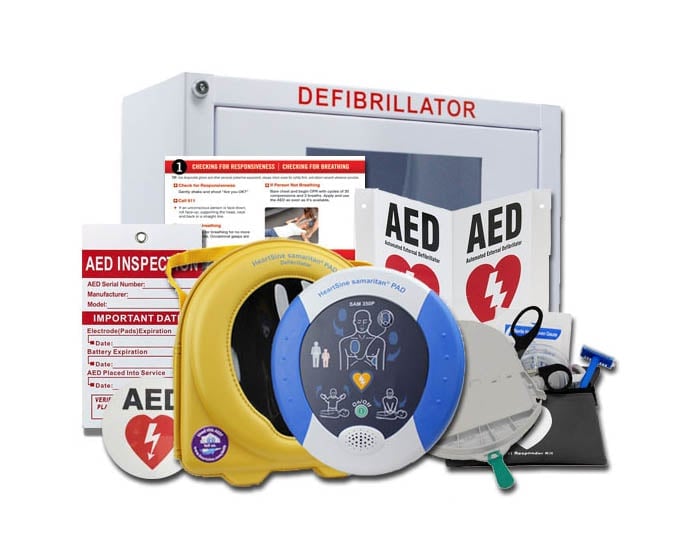
HeartSine Samaritan 350P AED Package
Compact, fully-automatic AED designed for first-time responders. Pads, battery, carry case and wall sign included.
Types of Defibrillators
Several types of external defibrillators are available, each designed for specific emergency situations.
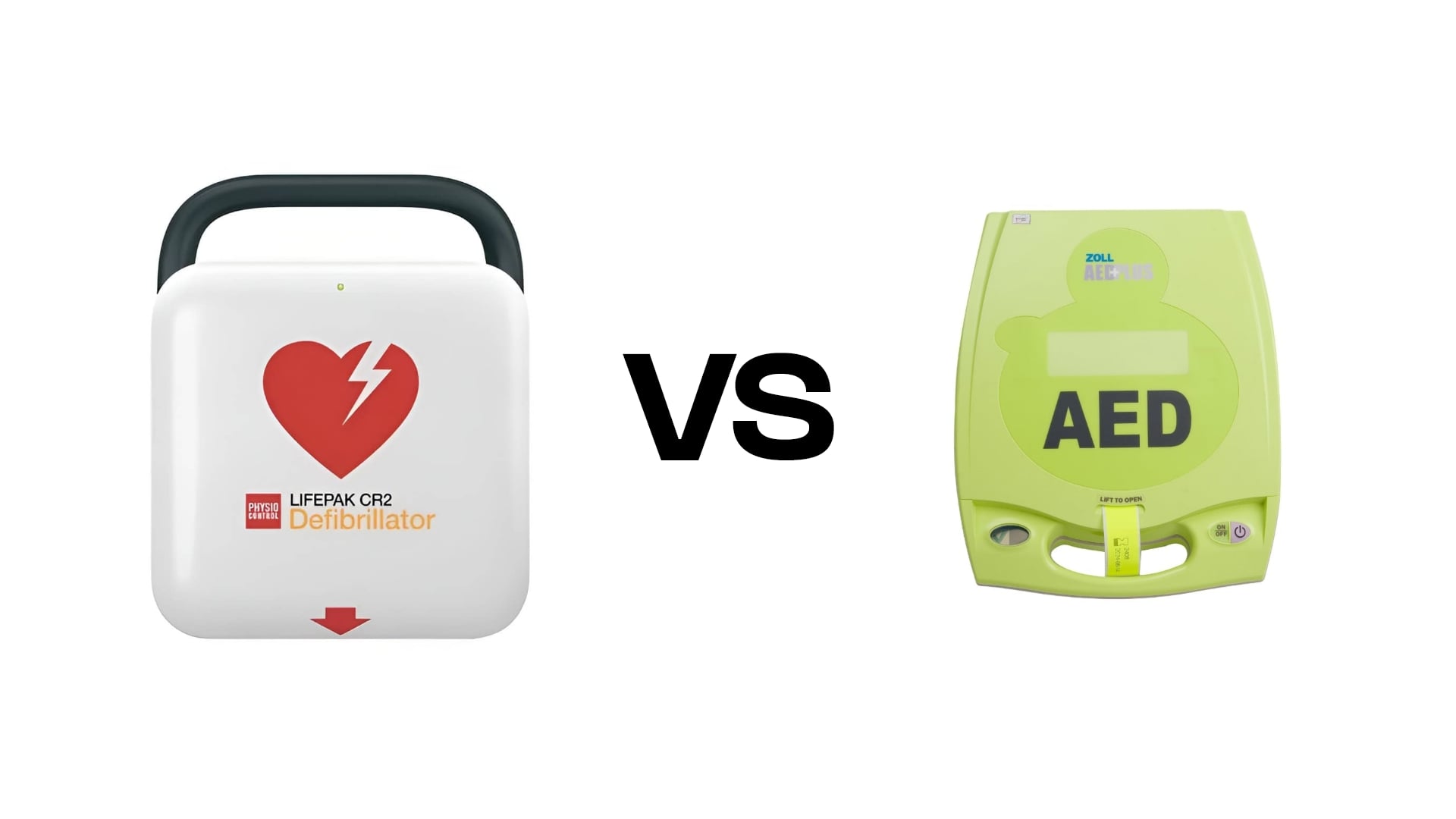
Automated External Defibrillators (AEDs) help restore a normal heart rhythm during cardiac arrest. They do this by delivering an electric shock. These devices are easy to use. Designers create them for the public in emergencies.
There are two types of AEDs:
- Fully-automatic AED (FAED): The AED assesses the heart’s rhythm and, if needed, advises when a shock should be delivered. It prompts bystanders to move away and then automatically administers the shock.
- Semi-automatic AED (SAED): The AED checks the heart’s rhythm. If it needs to give a shock, it tells the responder to press the shock button. Without this action, the device will not deliver the shock, even if it’s urgently needed.
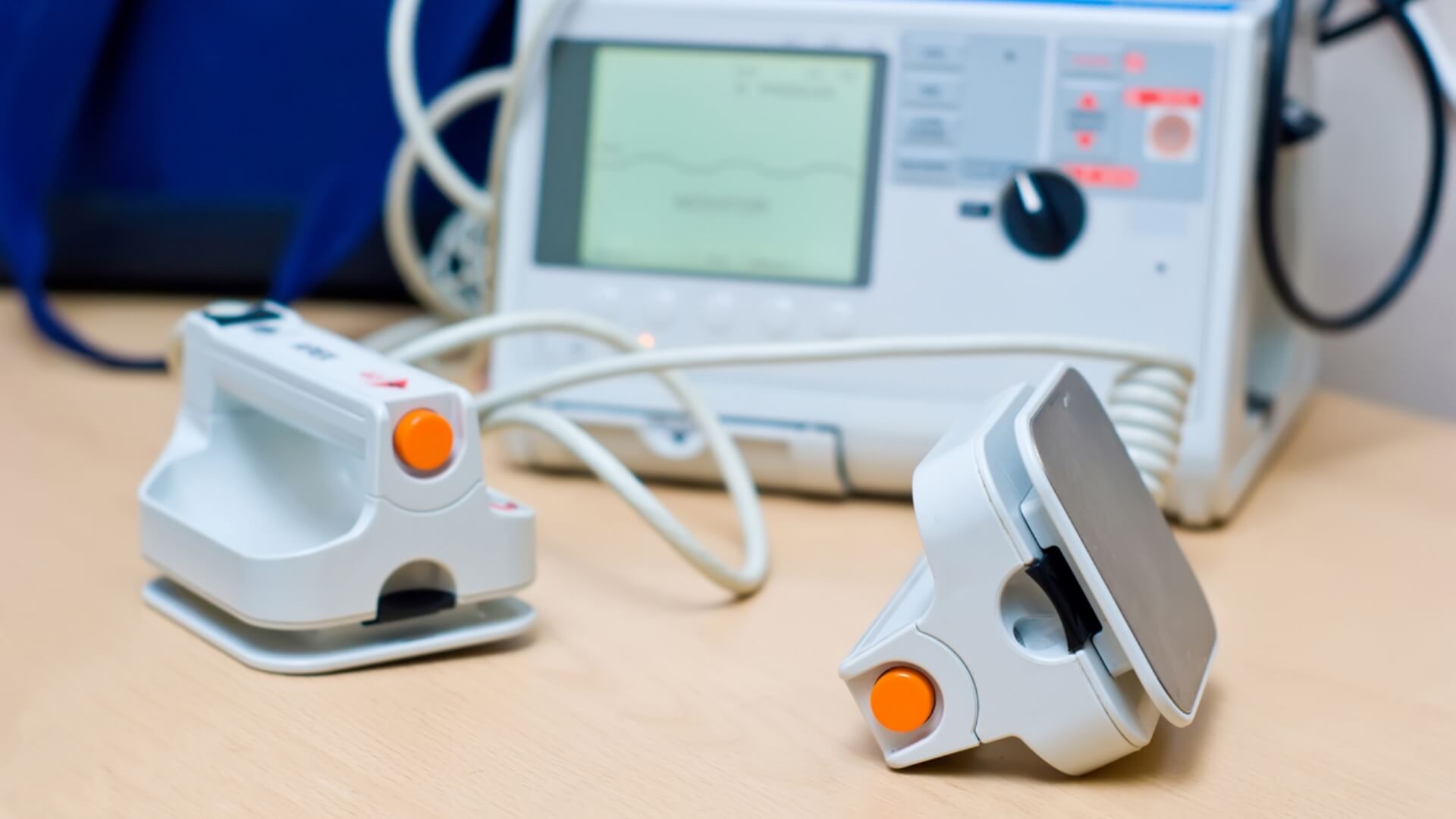
Manual defibrillators are advanced devices. You often see them in hospitals or ambulances. Trained medical professionals use these devices. Unlike AEDs, these devices let clinicians track ECGs in real time. They also allow full control for delivering shocks, pacing, or doing cardioversion. They are too complex, large, and heavy for public use. Instead, they are usually kept in clinical settings that need careful, hands-on decisions.
Monophasic and biphasic defibrillators use two pads. They send an electric shock to the heart. One pad has a positive charge, while the other has a negative charge. The main difference is in the current’s direction. Monophasic devices send it one way. Biphasic models reverse the flow halfway. This change boosts efficiency and usually requires less energy.
Energy Levels for Defibrillators
Defibrillators can use different energy levels. Research shows how these settings can help restore a normal heart rhythm.
Monophasic defibrillators usually deliver 200 to 320 joules of energy in a shock.
Biphasic defibrillators change the energy they deliver based on the patient’s impedance. They use built-in technology to reduce the shock when necessary. Depending on the device, they usually deliver between 120 and 200 joules per shock.
Risks Associated with Defibrillation
An AED should only be used when someone is in sudden cardiac arrest.
Every minute without defibrillation, a person in cardiac arrest loses 7% to 10% of their chance of survival. Immediate defibrillation is crucial. The life-saving benefits greatly outweigh any possible risks.
After surviving a sudden cardiac arrest, a person might have complications from defibrillation.
- Damaged cardiac and adjacent tissues
- Cardiac arrhythmias
- Skin burns
In some cases, using an AED might not be suitable. This is especially true for patients with irregular heart rhythms. It’s important to understand when defibrillation should be avoided.
Choosing the Right Defibrillator
Selecting the appropriate defibrillator is crucial for safe and effective treatment. Considerations like storage environment, electromagnetic interference, and ease of access play a role. Manual defibrillators have advanced features for trained users. In contrast, AEDs are easier to use and more accessible in public places.
Choose a defibrillator based on where and how it will be used. Choosing the right device guarantees reliable performance. It also boosts patient safety and improves treatment outcomes.
Enhancing Outcomes and Patient Safety
Ongoing training and sticking to clinical guidelines are key for safer and better defibrillation and cardioversion. These programs help healthcare providers learn the right timing and techniques. They also keep them updated on the latest advancements. This ensures the best possible patient care.
Interprofessional education helps improve patient safety and outcomes during defibrillation and cardioversion. Teamwork and shared knowledge among healthcare providers lead to better assessments. This also helps ensure coordinated care during critical procedures.
FAQs
What is the difference between cardioversion and defibrillation?
What is the mortality rate for cardioversion?
How many times can you shock a heart with a defibrillator?
How do you perform cardioversion?
What are the recommended energy levels for defibrillation and cardioversion?

Not sure which AED or training fits your needs?
An MDSI medical-oversight expert walks you through it — no obligation.
Talk to an expert →Conclusion
In short, it’s important to understand how cardioversion and defibrillation differ. Each plays a crucial role in treating abnormal heart rhythms. Both methods aim to restore a normal heartbeat. Yet, their use, timing, and energy levels depend on the patient’s condition. These interventions can save lives. They work in emergencies or planned procedures. Their effectiveness depends on proper use. Education, training, and quick responses are key to safe and effective cardiac care.